

Hospital signage fitted for busy entrances and medical access points
Hospital signage is usually installed where visibility matters most and where access is already tight. That can mean the main forecourt, casualty entrance, parking ramps, drop off areas, pharmacy access, wards, diagnostic units, or rooftop and parapet positions where the sign must be seen from the road. We work with sign makers to place the finished sign exactly where it needs to go, while keeping traffic flow, pedestrians and emergency routes in mind.
Typical hospital exterior work includes wall mounted box signs, built up lettering, blade signs, wayfinding panels, illuminated fascias and rooftop identifiers. In larger complexes we often coordinate with security, facilities managers and contractors on site so there is no conflict with visiting hours or ambulance movement. The work must be handled with care because a hospital is not a normal commercial site, and timing really matters.
Our crews are based in Paarden Eiland and Johannesburg, and travel across the Western Cape and Gauteng for installations, removals, servicing and emergency callouts. We do rigging only, so sign shops can keep their client relationship while we handle the access and hands on work.
Common sizes, mounting styles and lighting options
Hospital signage comes in many sizes, from a small illuminated direction board to a large roof sign measured in metres. The right option depends on viewing distance, wall structure, wind load, power points and how much of the building the sign must cover. For a busy hospital entrance, a 2 m by 600 mm fascia panel may be enough. For a main building identifier, 4 to 10 metres in overall width is common, especially where the sign has to be read from the road or from a parking deck.
We commonly handle the following mounting methods:
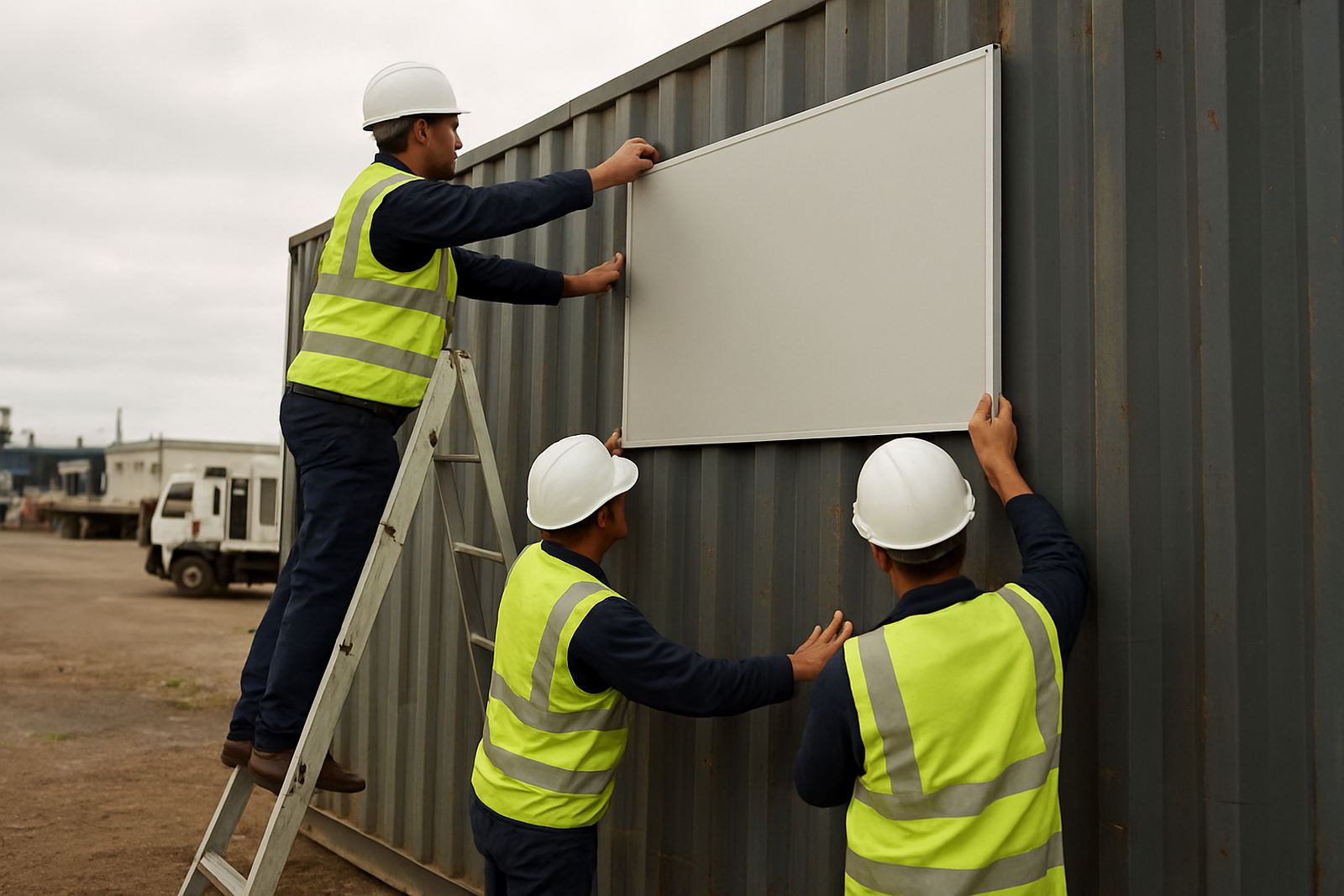
- Wall mounted signs fixed to concrete, brick, steel frame or cladding
- Roof mounted signs on structural frames or sleepers
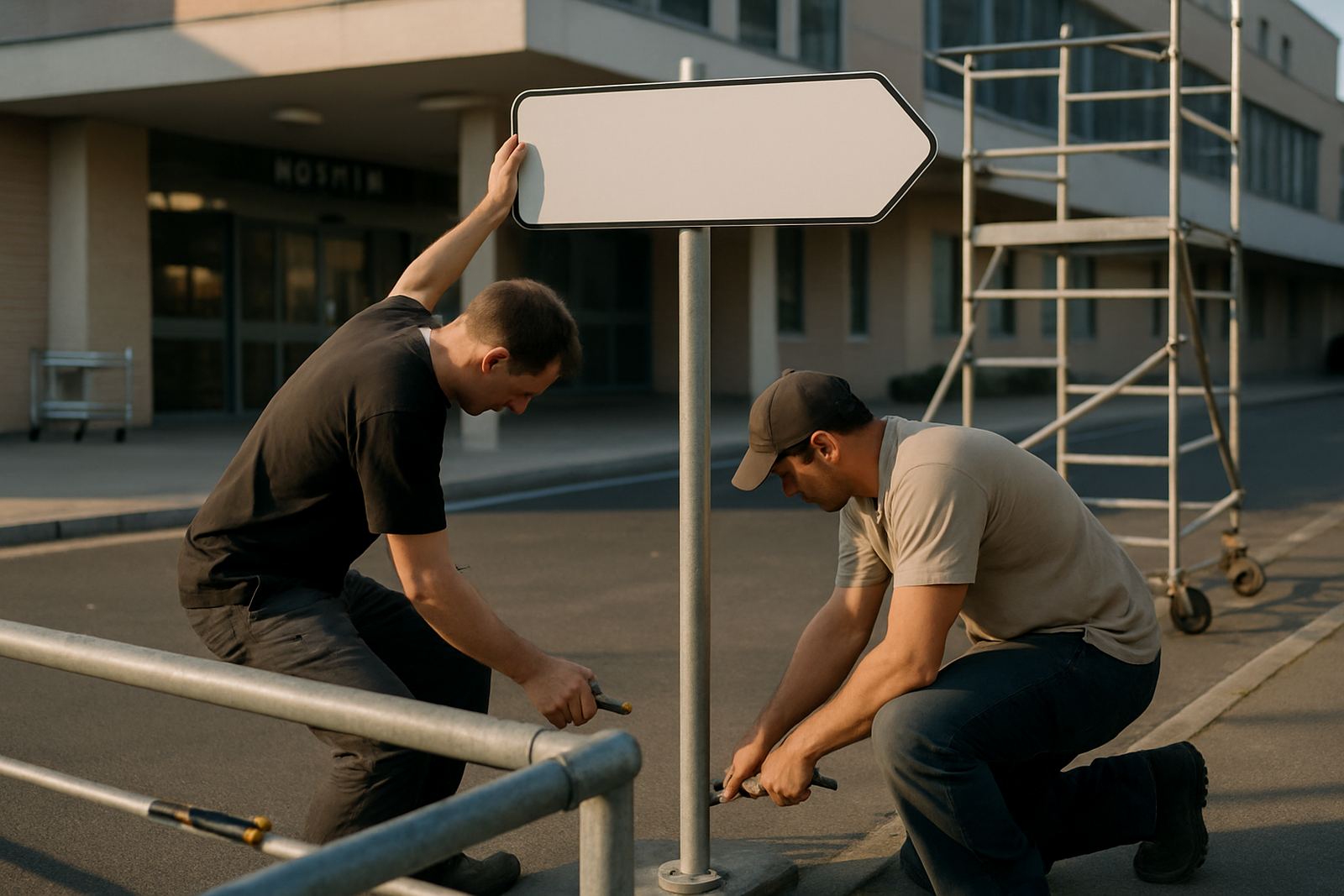
- Ground mounted signs on posts or plinths
- Blade signs projecting from a facade for side street visibility
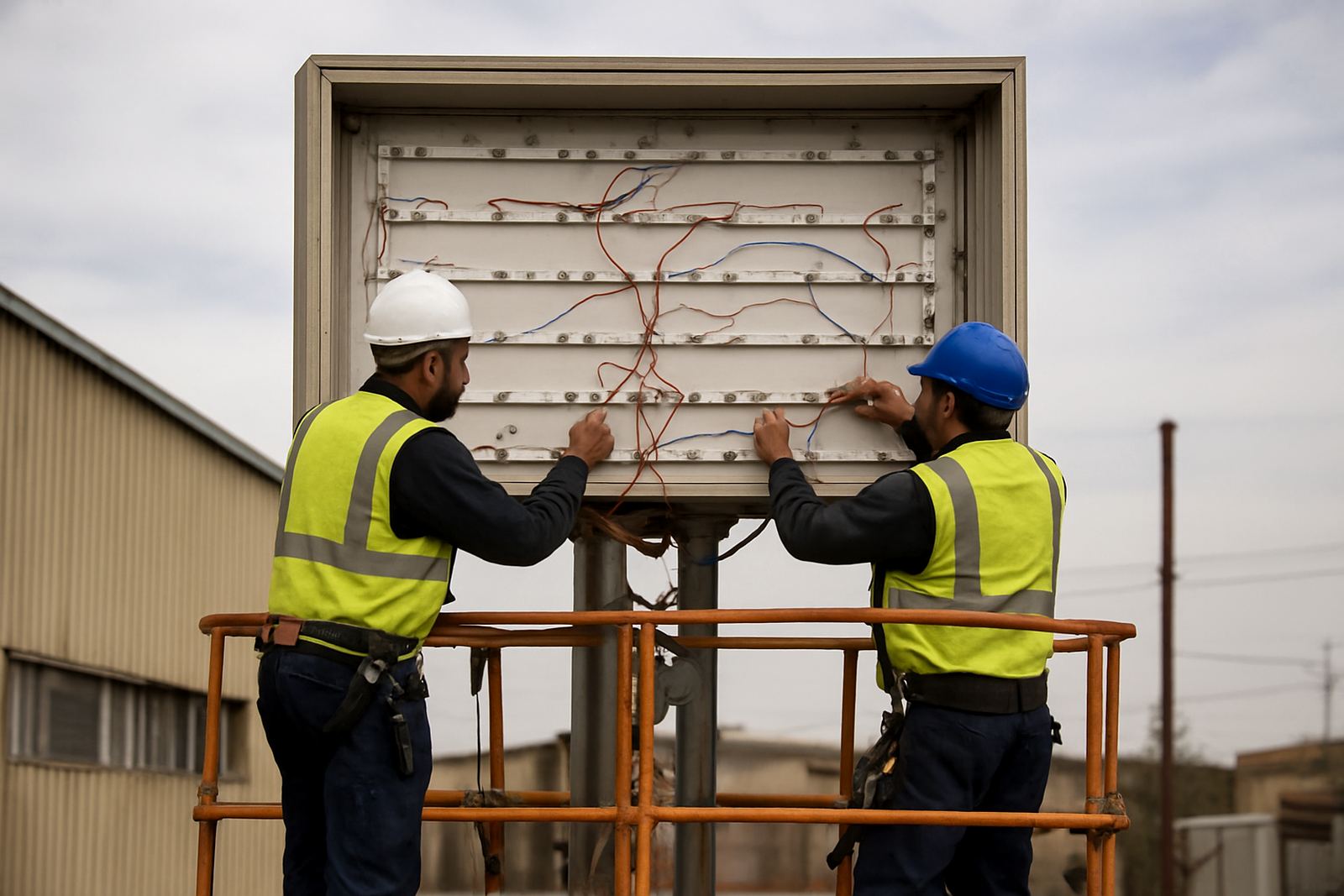
- Illuminated signs needing electrical connection and safe cable routing
Lighting may be LED modules, internal illumination, or external flood lighting depending on the sign design. Where a sign has electrical components, the sign maker or contractor should confirm the supply point, switching method and any isolator position before installation day. For larger illuminated signs, a power source within practical cable distance is important so the install stays neat and compliant.
Where hospital signs suit best on site
Hospitals often have several sign layers, and each one serves a different purpose. A main entrance sign helps visitors find the building. Directional signs guide people to casualty, maternity, ICU, radiology or parking. Rooftop branding supports visibility from nearby roads, while wall signs at the entrance assist first time visitors and delivery drivers. The trick is to place each sign where it does its job without blocking glazing, fire exits, CCTV sightlines or access for maintenance teams.
We also see hospitals in coastal areas where salt air can shorten the life of fittings, electrical connections and exposed brackets. In places like Somerset West or along the Cape flats, a sign may need extra attention to corrosion resistance and fixings that can take humidity and wind. In Johannesburg, dust and roof access can be the bigger issue, particularly on taller buildings in the CBD or where plant rooms and ducts crowd the roofline.
Before installation we check the surface condition, fixings, access route and any restrictions that may apply to the site. If the work involves a public road, walkway or loading bay, we plan around it so the hospital keeps functioning properly.
Installation planning, access and safety controls
Hospital sign installation normally starts with a site survey and lift planning. We look at roof edges, anchor points, scaffold access, platform access and the safest way to move the sign into position. Some jobs need early morning work before peak foot traffic, while others are better done after visiting hours. If the sign is above an entrance, we may have to sequence the work around patient drop off times so there is no unnecessary disruption.
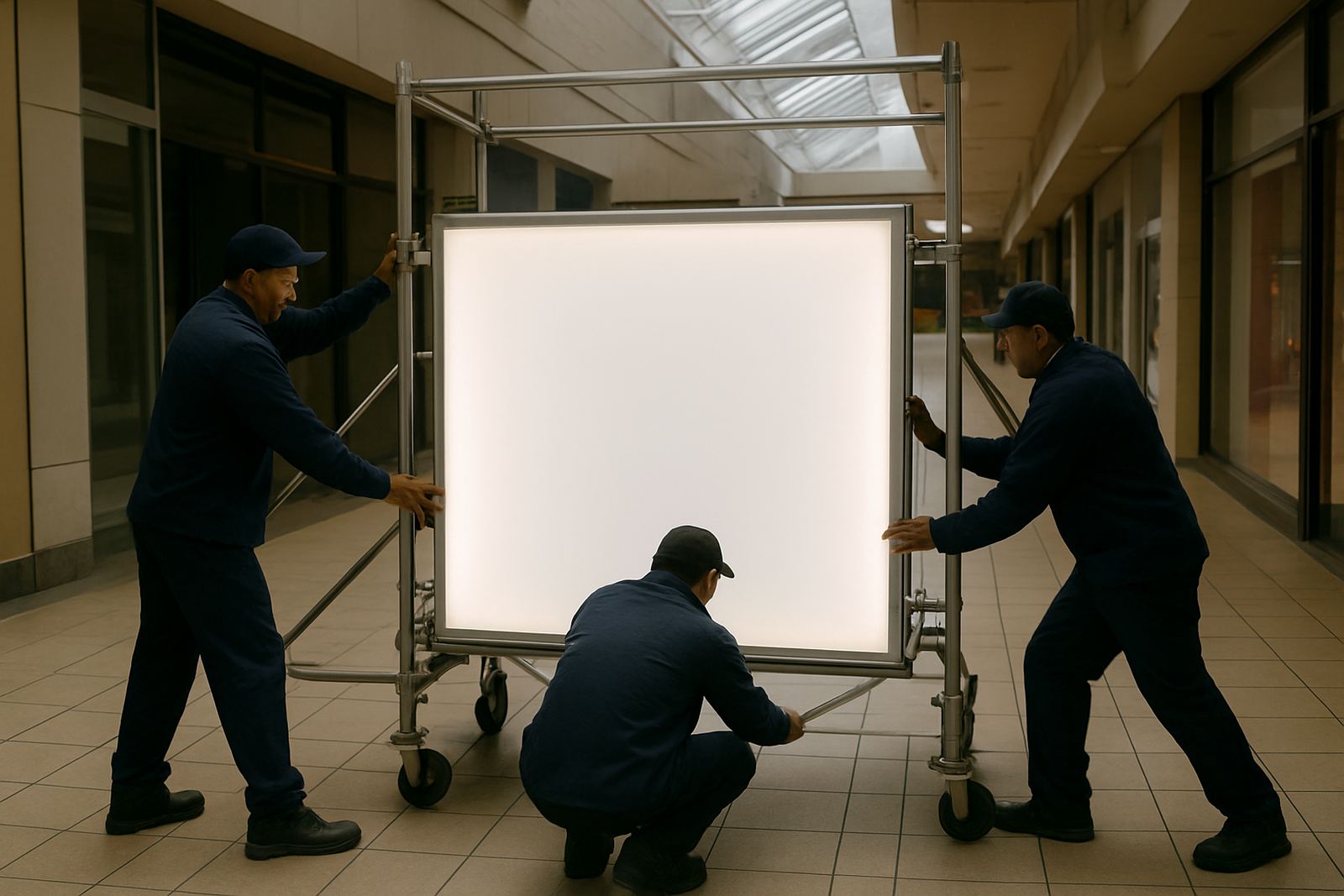
Our crews are safety trained, scaffold trained and first aid trained. That matters when a sign has to be manoeuvred close to glass, above canopies, or over active driveways. We also coordinate with the sign maker on packaging, offloading and the order of assembly. On larger jobs, one team may handle the structure while another manages the face, cabling or final alignment. It keeps the job moving and helps avoid damage to the sign or the building.
- Site survey before the install date
- Access method agreed in advance
- Weather check for wind and rain
- Public area protection where needed
- Final position checked with the client before handover
If the site has strict security rules, we plan for inductions and sign in procedures before arrival. That saves time on the day and helps keep the project on schedule. On some hospital jobs, a short delay can affect several departments, so good planning is worth it.
Servicing, repairs and emergency work on existing signs
Hospitals cannot always wait for a sign to fail completely before action is taken. A flickering illuminated panel, a loose bracket or a damaged face may need attention straight away. We handle sign servicing, maintenance visits, sign relocations and emergency callouts for sign makers and their hospital clients. That may include replacing failed lighting components, tightening fixings, removing water ingress, or resetting a sign after storm damage.
Routine maintenance is worth scheduling at least once or twice a year, especially on signs exposed to coastal air, strong sun or high wind. In Johannesburg, rooftop dust and heat can affect seals and fittings, while in the Cape the concern is often corrosion and weathering. A small issue left too long can become a bigger, more costly repair. We can also remove a sign for refurbishment and return later to reinstall it once the sign shop has finished the work.
- Loose or corroded fixings
- Dead lighting or uneven illumination
- Cracked acrylic or dented panels
- Water inside electrical housings
- Movement after heavy wind or vandalism
If a sign is unsafe, we can remove it first and advise on the next step. That helps protect staff, visitors and the building fabric. It also gives the sign maker a practical way to manage the site while repair work is being arranged.
What to confirm when ordering hospital signage
When ordering hospital signage, the most useful information is the one that affects access, weight and visibility. We need clear sign dimensions, the fixing method, the exact location on site and whether the sign will be installed, removed or serviced. If there is illumination, confirm whether power is already in place and where the isolator sits. If the sign is large or awkward, give the estimated weight and whether it will arrive in one piece or as sections.
It also helps to know the site contact, any hospital safety requirements and whether the work must happen outside visitor peak times. If the area is near a road, ambulance bay or public walkway, tell us early so we can plan the equipment and manpower properly. A little detail upfront avoids delays later and helps keep the job tidy from start to finish.
- Overall dimensions and approximate weight
- Mounting surface and height above ground
- Illumination details and power position
- Access restrictions and preferred working times
- Whether the sign is new, being removed, or going back after repair
For hospitals, the right sign is only part of the job. The other part is safe access, clean installation and working around people who need the site to keep running. That is where we come in.
Key facts
| Service type | Hospital sign installation, removal, servicing and emergency callouts |
|---|---|
| Typical sign sizes | Small panels from 600 mm wide to large roof signs over 10 m |
| Access methods | Scaffold, platform work, lift planning and controlled manual rigging |
| Lighting support | Illuminated and non illuminated signs, with cable routing coordination |
| Operating regions | Cape Town, Johannesburg, Western Cape and Gauteng |
| Base locations | Paarden Eiland, Cape Town and Johannesburg |
| Crew capability | Safety trained, scaffold trained and first aid trained teams |