

Parking signs that do the job at the gate, bay and boom
Parking signs are used to guide vehicles, control access and set the rules from the moment a driver enters a property. We work on parking guidance signs for offices, retail centres, schools, apartments, warehouses and public sites where clear direction matters. The work is rigging only, so we install, remove, service and relocate signs for the sign makers and fit-out teams who supply the graphics and approval paperwork.
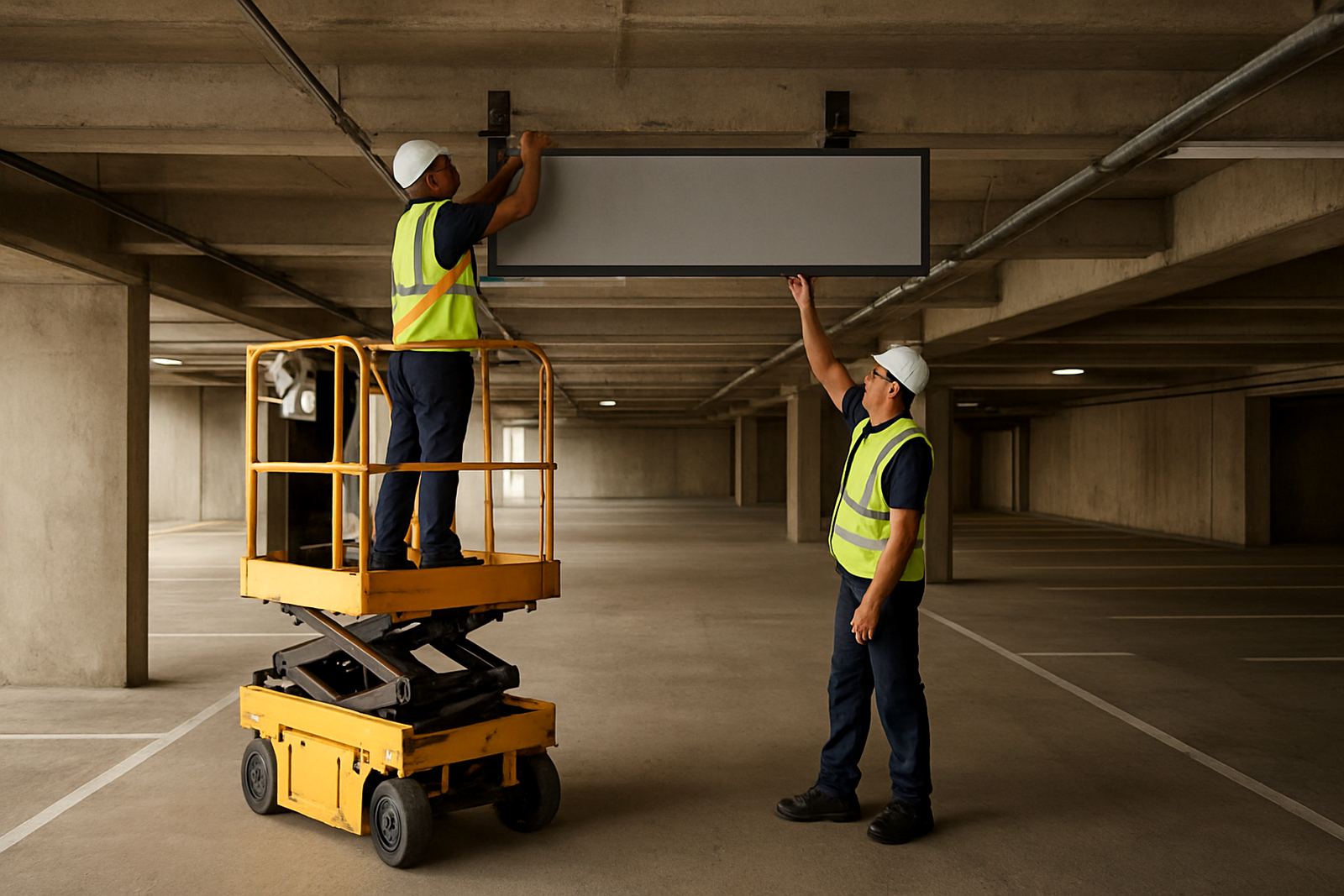
Typical parking sign work includes entry boards, visitor parking signs, permit bays, loading zone signs, pay parking notices, disabled bay signs and overhead clearance signs. We also handle signs above boom gates, in covered parking basements and at vehicle entrances where a proper fix and the right reach equipment are needed. If the site has tight access, low roofs or active vehicle flow, we plan the job so the crew is in and out quickly without blocking traffic longer than needed.
Common sizes, materials and fixing options
Parking signs come in a few standard formats, but the right size depends on how far away a driver needs to read it and how busy the approach road is. Smaller signs suit bay marking and internal notices, while larger boards are better for entrances, overhead restrictions and fast moving vehicle areas. We work with aluminium composite panels, aluminium sheet, reflective faces and applied vinyl graphics, depending on the sign shop spec.
- Small bay or wall signs: 300 x 450 mm and 450 x 600 mm
- Medium entry signs: 600 x 900 mm and 900 x 1200 mm
- Large directional and overhead signs: 1200 x 1800 mm or made to site size
- Fixings: wall plugs, chemical anchors, bracket sets, pole straps and frame mounts
- Optional extras: anti-tamper fasteners, standoff mounts and reflective sheeting for low-light areas
We often see parking signs mounted on brick walls, blockwork, painted steel, tubular posts, boom arms and canopy structure. The fixing choice has to suit the surface and the wind load, especially along the Cape coast where salt air and gusts can shorten the life of poor hardware. In Johannesburg, high UV and dust can also age exposed hardware and face material faster than expected.
Where parking signs work best
Parking signs are used wherever people and vehicles need simple direction. We see the most requests from shopping centres, office parks, hospitals, schools, body corporate sites, light industrial yards and mixed-use buildings. On busy properties the sign often needs to do more than point the way. It may need to separate staff parking from visitor parking, show where deliveries go, or keep emergency lanes open.
In Cape Town, parking signs on coastal sites need solid fixings and neat sealing because moisture and wind can work into weak points. In Johannesburg and Midrand, signs at basement ramps and multi-storey parks often need accurate clearance checks so tall vehicles do not catch the board or frame. Municipal by-law wording may also need to be shown clearly for no parking zones, loading bays and tow-away areas, so the layout should be checked before print and install.
- Hotels and guest houses with visitor parking and drop-off bays
- Retail sites needing clear customer flow and loading control
- Schools and clinics where safety and traffic control matter
- Warehouses and factories with truck routes and staff bays
- Residential estates with visitor rules and body corporate signage
Installation planning for safe access and good visibility
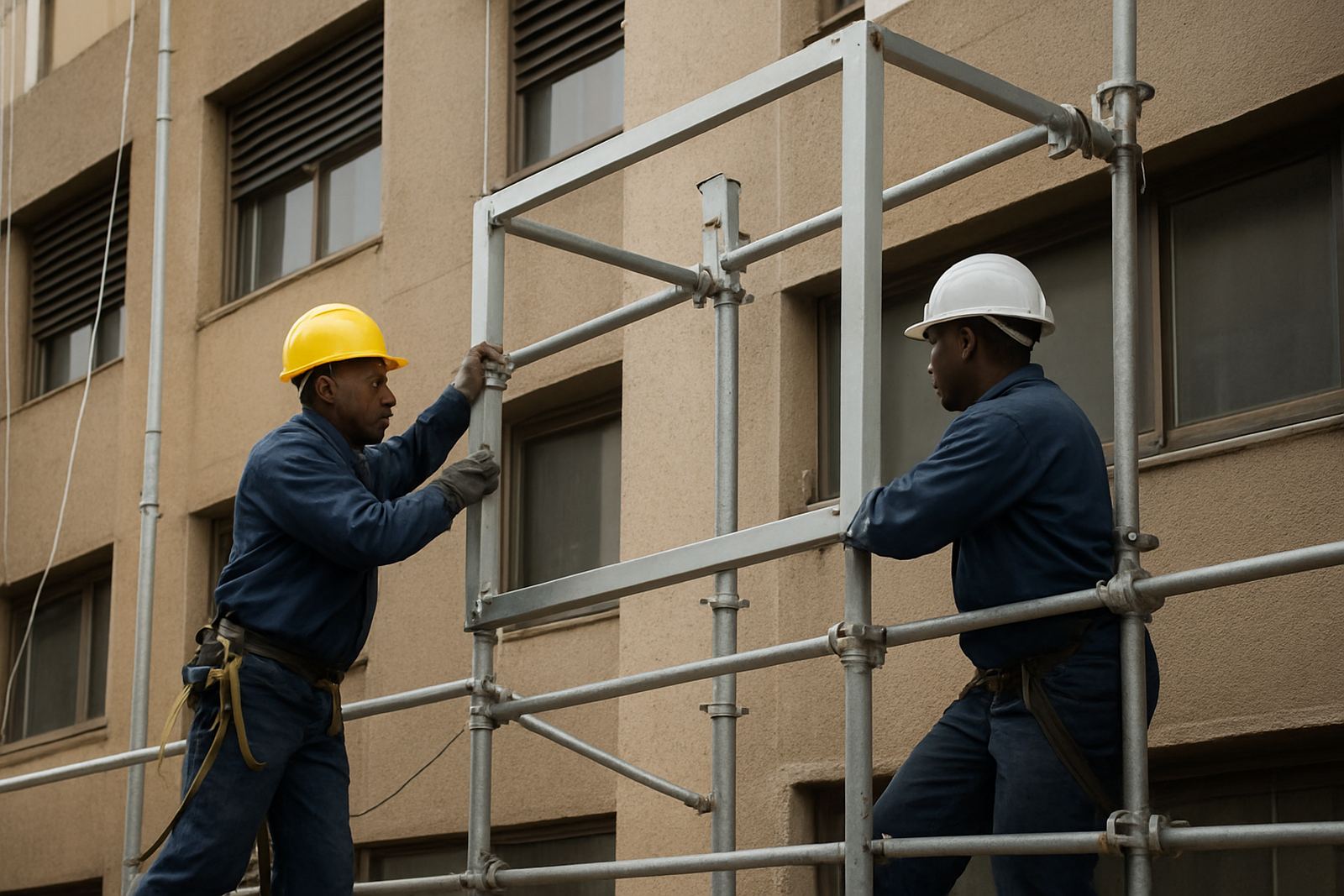
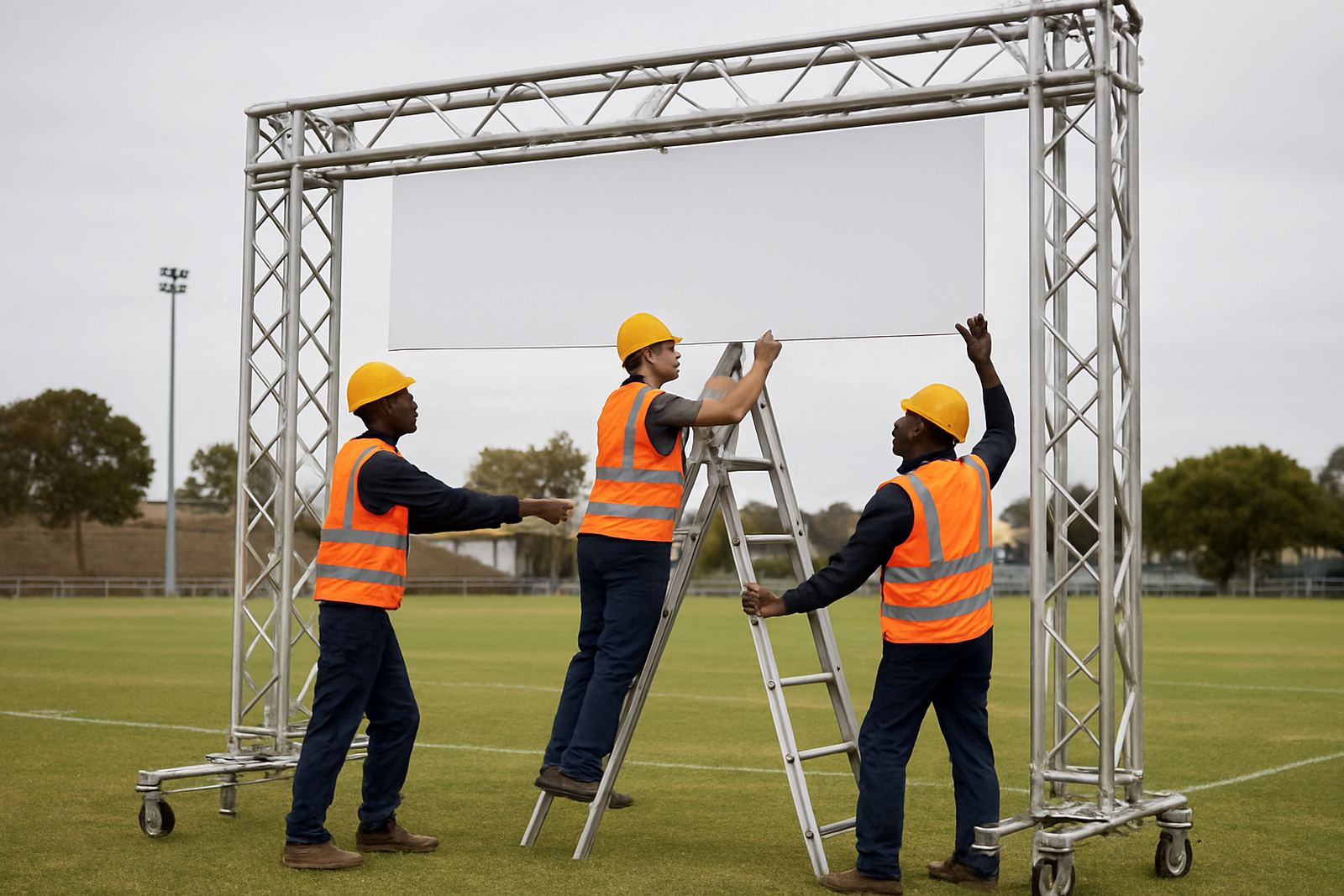
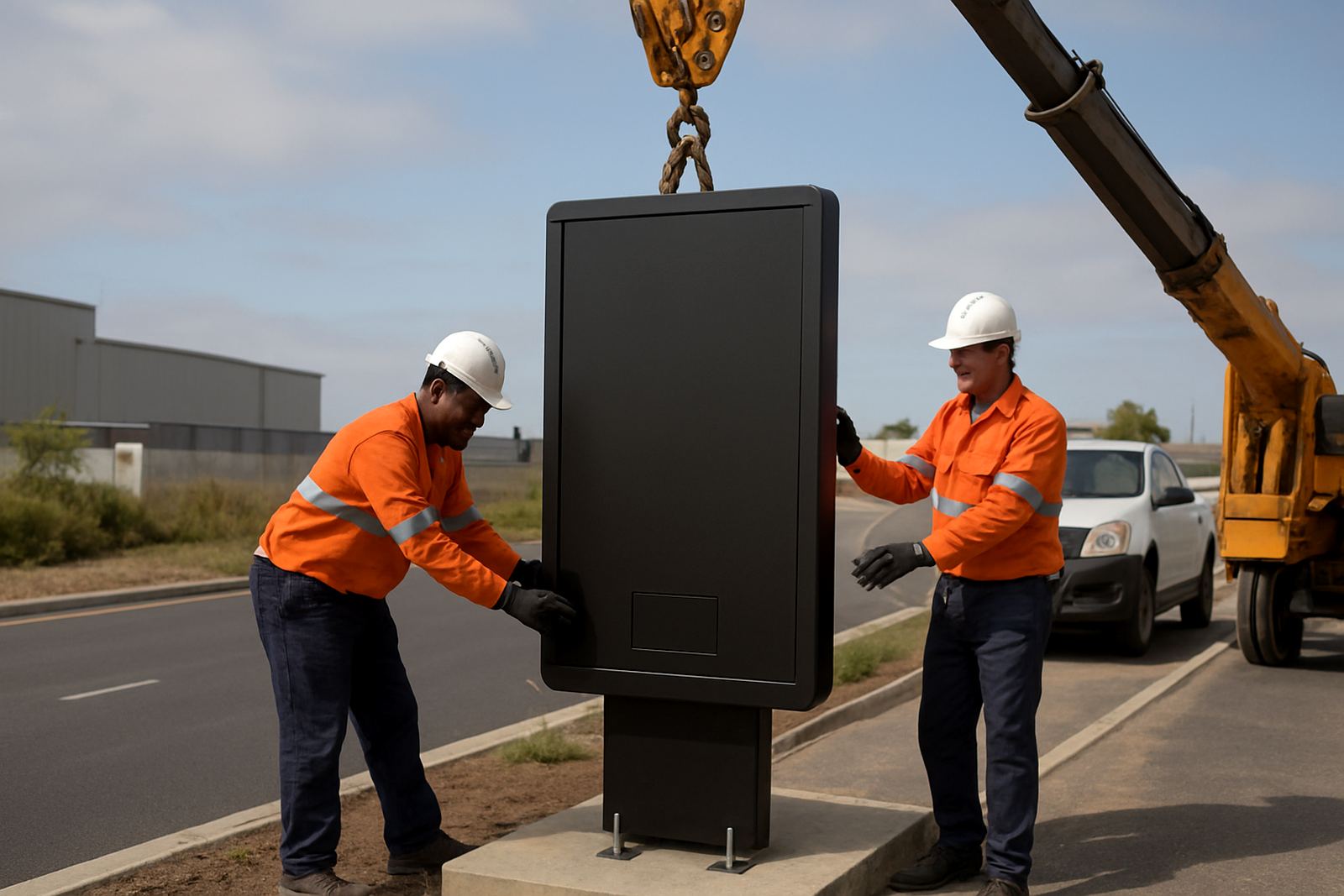
Parking sign installation starts with a site survey so we can check height, reach, mounting surface and vehicle movement. If the sign is above a driveway or on a high wall, we plan scaffold access, platform work or lifting equipment as needed. We also look at whether the site is live and whether the crew needs to work before opening hours, after hours or during a short traffic pause. That planning keeps the job safe and keeps the sign where it can actually be read.
For new parking areas, we recommend checking sight lines from the driver position and the turning angle into the bay or entrance. A sign can be the correct size and still be missed if it sits too high, too low or behind a pole, tree or open gate. We also check clearances on overhead boards and canopies, because one mistake there can lead to impact damage and repeat callouts.
- Site survey and lift planning before install
- Scaffold or platform access for elevated work
- Installation around operating traffic and pedestrian routes
- Removal of old signs and hardware where required
- Relocation of existing signs to suit new traffic flow
Power, lighting and special site needs
Many parking signs are non-electrical, but some need lighting, backlit panels or connection to an existing site supply. When a sign includes lighting or sits in a dark basement, under a canopy or beside a shaded access road, the install has to allow for power and safe cable routing. We handle the rigging side and work with the sign shop or site contact to make sure the mounting and access are right before any final connections are made by the relevant trades.
For overhead clearance signs and entrance boards, we also check nearby services and building features before fixing anything. Gas lines, sprinkler pipes, electrical conduits and alarm cabling are easy to miss from ground level. A proper site look over reduces damage and saves time later. On sites with load-shedding backup or generator supply, it is worth confirming what needs to stay live and what can be isolated during the work, otherwise the timing gets messy very quickly.
Care, servicing and what to check before you order
Parking signs need periodic servicing, especially where cars brush past them, security gates move close to them or weather works on the fixings. Loose brackets, faded print, bent frames and cracked panels are common callouts. We do maintenance visits, emergency removals and sign servicing so the sign shop can keep the client site in order without sending in a fresh install crew every time.
Before you order, check the following details so the sign is made and installed correctly first time:
- Exact wording, including permit rules, hours and directional arrows
- Final size and whether it must be read from a vehicle or on foot
- Mounting surface, height and available fixing points
- Whether the sign needs reflectivity, illumination or anti-tamper fixings
- Any municipal, body corporate or site-specific wording that must appear
- Whether old signs need removal, relocation or disposal after the new install
If the sign is going into a coastal area, ask about corrosion-resistant fixings and regular checks. If it is going into a busy commercial site in Gauteng, ask about impact risk from delivery trucks and whether a sacrificial frame or standoff is needed. A sign that is easy to maintain will cost less over time, and it stays legible when people actually need it.
Key facts
| Product type | Parking signs for guidance, entry control and clearance |
|---|---|
| Typical sizes | 300 x 450 mm up to 1200 x 1800 mm and custom |
| Materials | Aluminium composite, aluminium sheet, reflective faces, vinyl graphics |
| Mounting options | Wall mount, pole mount, frame mount, canopy and overhead fixings |
| Install areas | Cape Town, Paarden Eiland, Bellville, Somerset West, Paarl, Johannesburg CBD, Sandton, Midrand, East Rand |
| Service support | Installation, removal, servicing, relocation and emergency callouts |