

Mesh banners for windy sites, long fences and building wraps
Mesh banners are made for places where a solid banner would catch too much wind. The perforated face lets air pass through, which makes them a sensible choice for building facades, perimeter fencing, construction sites and temporary event boundaries. On coastal jobs in Paarden Eiland, Bellville and Somerset West, that extra airflow matters. It helps reduce strain on the banner and on the structure it is fixed to.
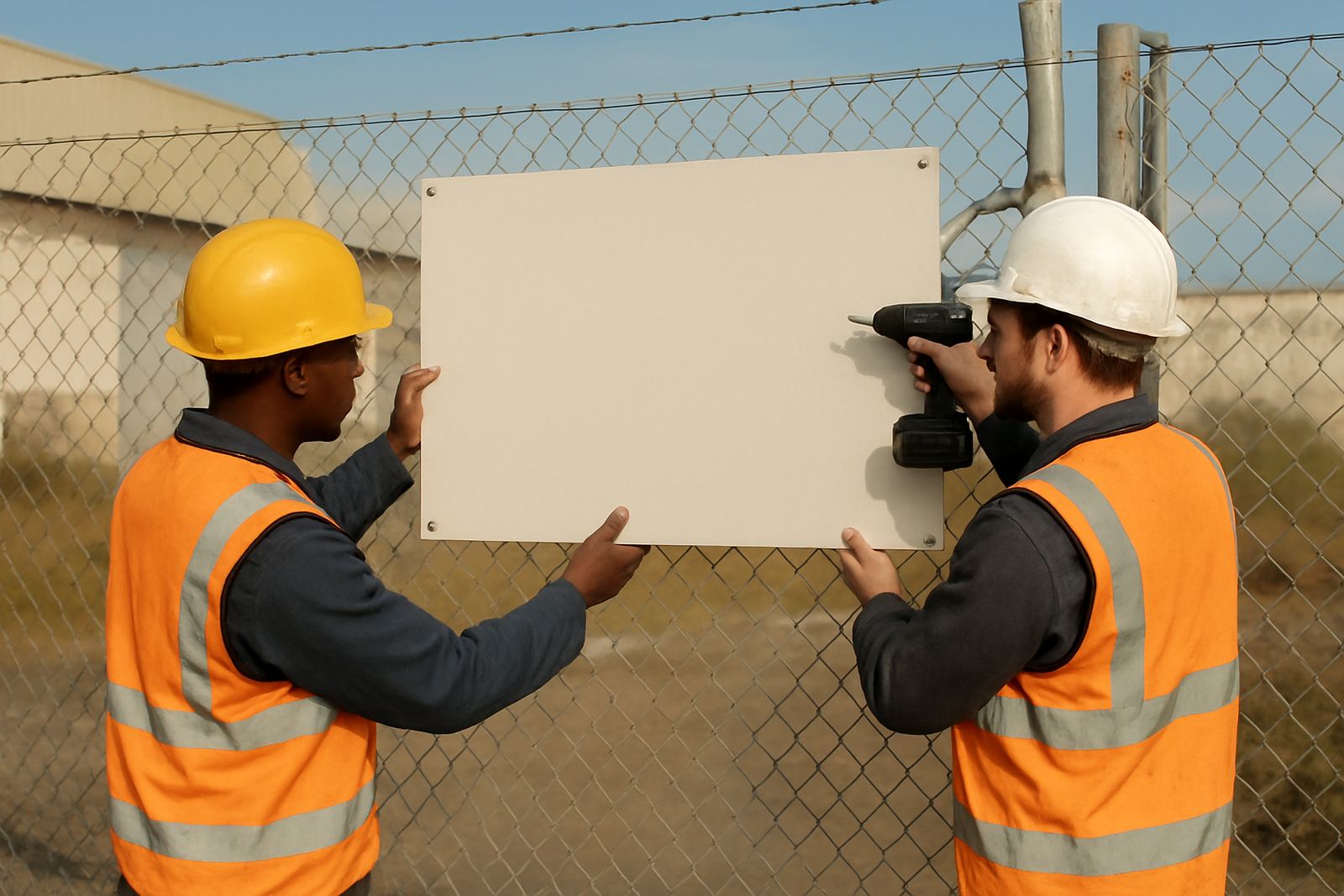
We rig mesh banners for sign makers who need a clean, straight finish without taking on the access work themselves. Our crews handle the installation, removal and servicing side only, so you can keep your own client relationship intact. The work is planned around the site conditions, fixing points, access route and the amount of wind exposure the banner will face.
- Suitable for walls, scaffolding, temporary hoardings and fence lines
- Useful where wind loading is a concern
- Common for promotions, site branding and event perimeters
- Can be installed as a short term or longer term display
Sizes, edge finishing and fixing options that suit the site
Mesh banners are usually ordered to fit the exact opening or span, rather than forcing a standard size onto the site. We work from the artwork size, the structural size and the safe fixing allowance so the banner lands where it should. If the banner is going on a fence line in Midrand or a building face in Johannesburg CBD, the measured gaps, anchors and access points all need to be checked before installation.
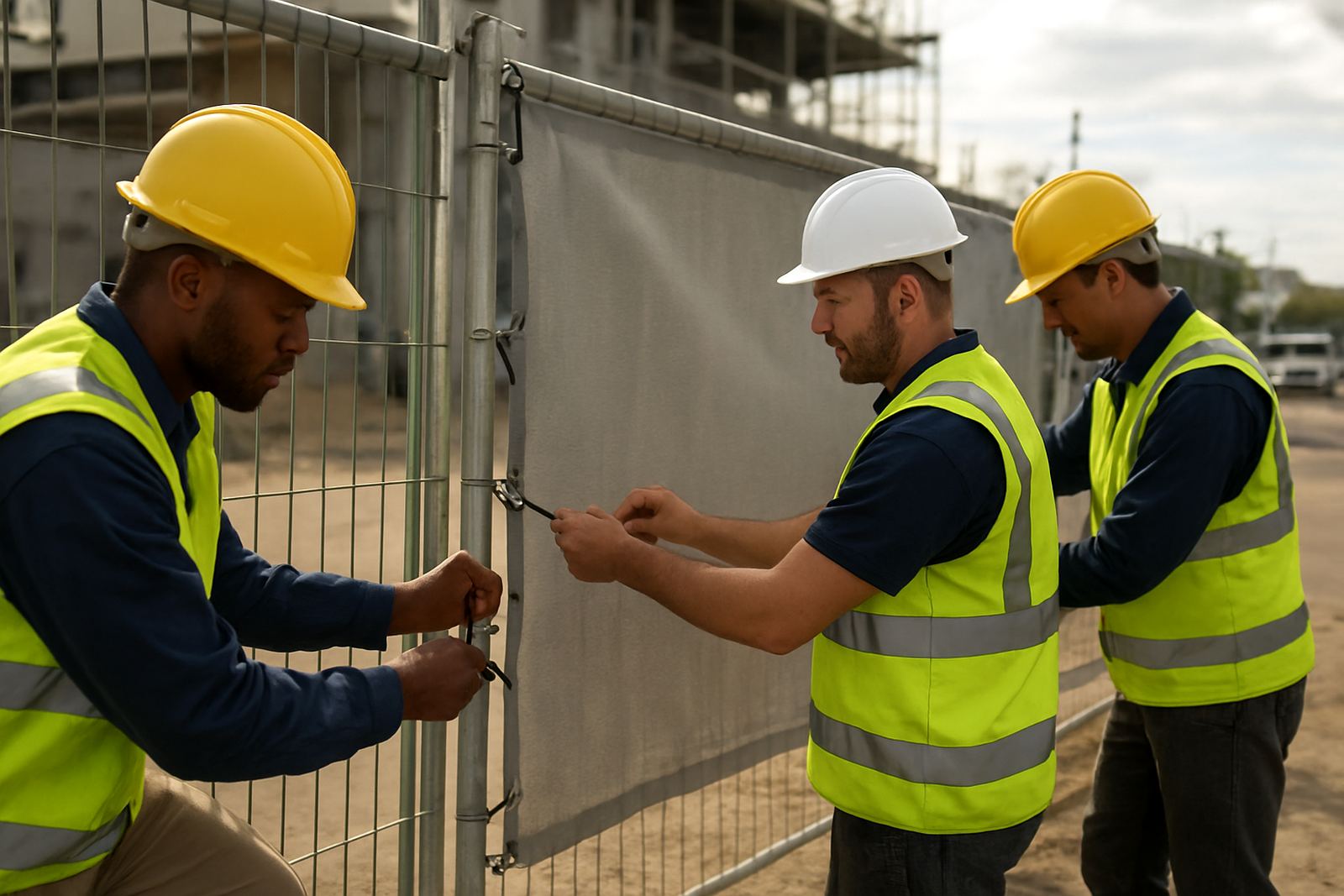
Common options include hemmed edges, reinforced corners, eyelets, rope pockets and pole sleeves, depending on how the banner will be carried and tensioned. For larger spans, we often recommend extra reinforcing or load spread points so the banner does not flutter at the edges. That small extra bit of prep saves a lot of call backs later.
- Custom widths and lengths to suit the opening
- Edge hems for strength on exposed sites
- Eyelets for tie-down points along fences or scaffold
- Rope pockets or sleeves where a top and bottom rail is used
Where mesh banners work best in Western Cape and Gauteng
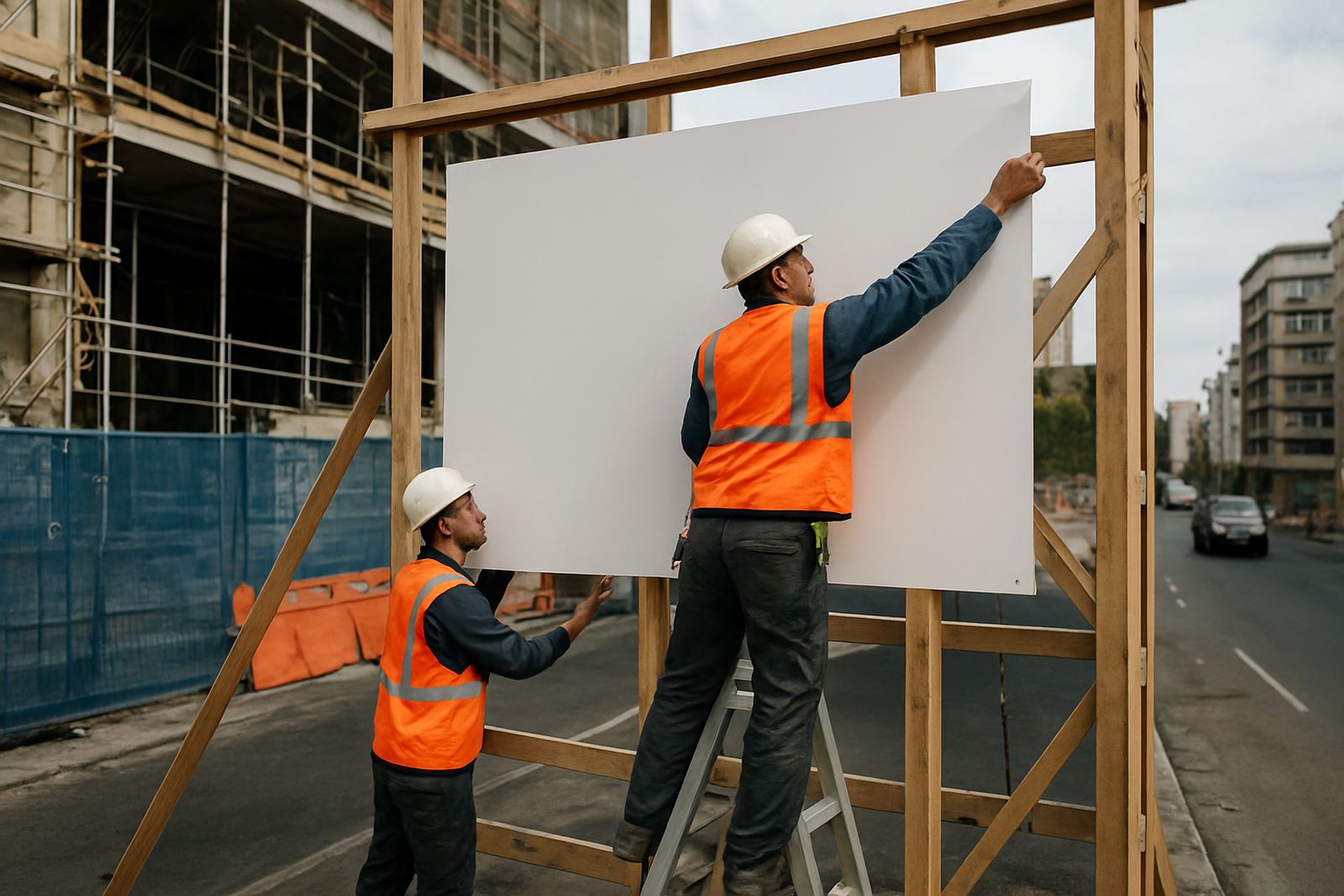
Mesh banners are a practical choice for construction sites, retail refurbishments, road-facing promotions and events that need a visible boundary. They also work well on long runs of palisade fencing, scaffold wraps and building renovation screens. In coastal areas, the banner has to cope with salt air and regular wind. Inland, the main issue is often dust, heat and sun exposure.
For clients in Paarden Eiland, Paarl and Somerset West, we often see mesh used where the site is exposed to afternoon wind and traffic dust. In Sandton, Midrand and the East Rand, mesh banners are often installed at active sites where access is limited and the banner needs to stay tidy for weeks or months. If the surface is uneven or the fixing line is broken up, we plan the rigging points so the banner pulls evenly rather than sagging in the middle.
- Construction hoardings and temporary screens
- Retail frontage during refurbishments
- Event fencing and crowd control perimeters
- Building facades with access from scaffold, lifts or access platform
How we install mesh banners safely and cleanly
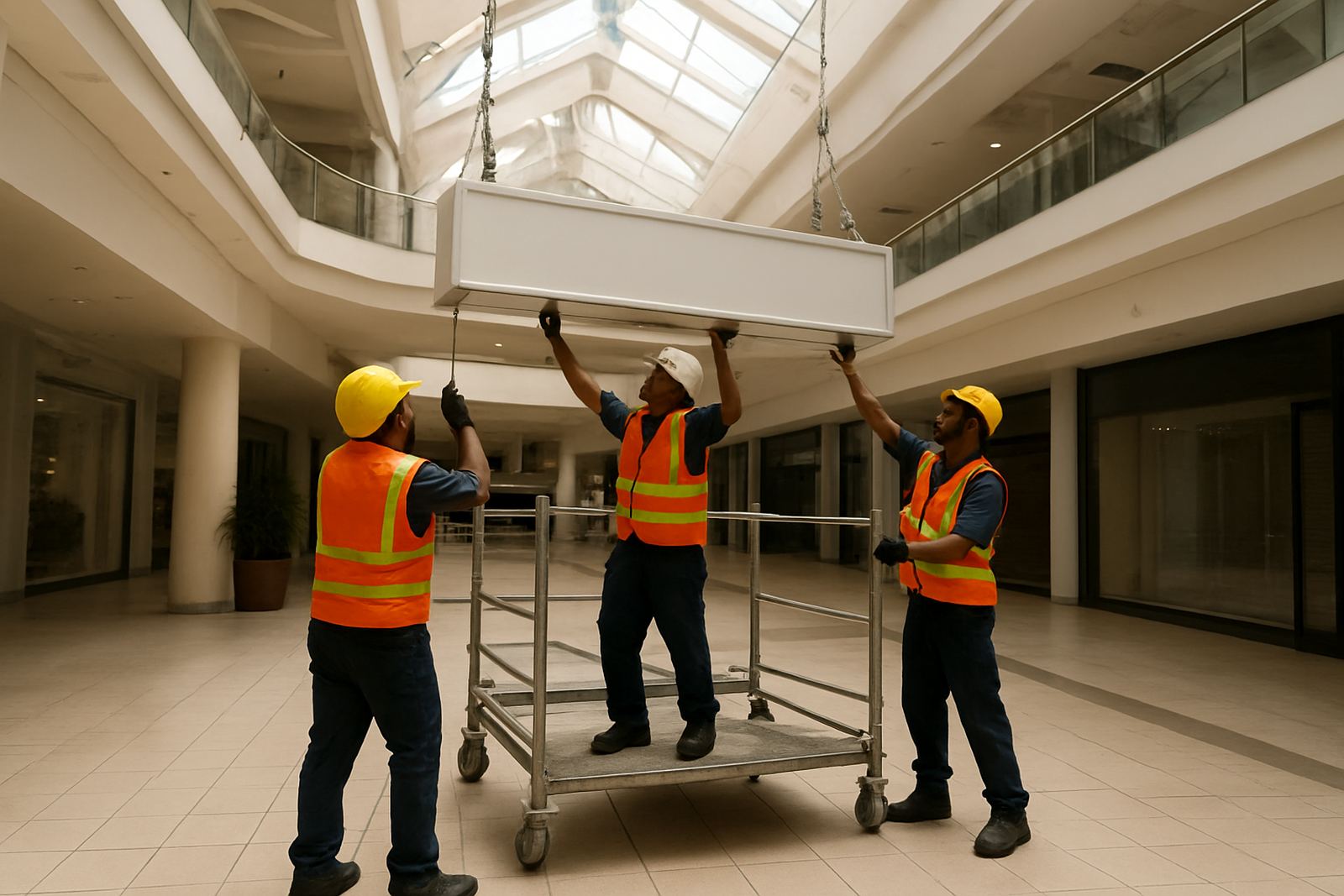
Mesh banner installation starts with a site survey or a clear set of drawings and photos. We check the structure, access height, wind exposure, ground conditions and any nearby hazards before the crew goes up. If the banner requires scaffold, a platform or lift work, we plan the access method first so the fixing work can be done properly and without rushed movement.
Our rigging teams are scaffold and first aid trained, and the job is managed with the same care whether it is a one day install or a longer maintenance visit. On active sites we also look at public protection, traffic movement and whether the banner will need to be installed outside trading hours. If a sign face is being changed at the same time, or a banner is going in beside existing signage, we sequence the work so the site stays orderly.
- Site survey and lift planning where access is tight
- Installation by trained rigging crews only
- Removal and re-installation if the banner needs to move
- Emergency callouts for loose edges or damaged fixings
Power, lighting and other site needs to confirm first
Mesh banners themselves do not need power, but the site may need lighting access if the banner sits near illuminated signage or if the job runs into early morning or after-hours work. If the banner is being fitted around floodlights, facade lights or existing electrical fixtures, those items must be checked and isolated as needed before the crew starts. That is especially important on busy commercial sites where the power isolation point is not obvious.
Some banners sit close to gas lines, rooftop plant, HVAC equipment or fire escape routes, so we ask for that information before the job is scheduled. It helps avoid delays and keeps the crew from having to stop halfway through because a service pipe or access hatch was not flagged. The more accurate the site information is, the smoother the install will go, and less time gets lost on the day.
- Confirm whether any lighting access is needed
- Mark out all power, gas and plant equipment nearby
- Tell us if the job must happen after hours or over a weekend
- Share any municipal or site access rules before installation
Care, servicing and what to order with the banner
Mesh banners do best when they are checked regularly, especially after strong wind, heavy rain or a stretch of hot sun. A loose banner edge can start to fray, and a missing tie or tired fixing point can make the whole face look untidy. On longer term jobs we can return for maintenance visits, re-tensioning and replacement of damaged fixings. If a banner is being reused, it should be rolled and stored dry so it does not hold moisture or pick up mould.
When ordering, it helps to confirm the exact site width, the preferred fixing method, the expected display period and whether the banner must be removed and refitted later. If the banner is going near public movement areas, ask for a proper edge finish and enough fixing points to keep it still. A banner that looks fine on a proof can still move badly on site if the wind load was not considered.
- Exact finished size, not only the artwork size
- Where the banner will be fixed and from what height
- Whether the site is coastal, dusty or exposed to strong wind
- Need for removal, servicing or relocation after the campaign
Key facts
| Material | Perforated PVC mesh banner material for wind-permeable installs |
|---|---|
| Common uses | Building wraps, fence banners, scaffold screens, event perimeters |
| Finish options | Hems, eyelets, rope pockets, reinforced corners |
| Typical sizes | Custom made to site measurements, from small panels to long runs |
| Installation support | Site surveys, scaffold access, platform work and lift planning |
| Service area | Paarden Eiland, Cape Town, Johannesburg and wider Western Cape and Gauteng |