

Campus signs that need safe, accurate rigging
School signage comes in many forms, from large entrance signs at the gate to hall name boards, wayfinding panels, sports field markers and building identification signs. Our role is to install, remove or service those signs without competing with the sign shops that supply them. We work for sign makers who need a dependable rigging crew on site, whether the job is in Paarden Eiland, Bellville, Sandton or Midrand.
For schools, timing and site control matter just as much as the sign itself. Work often has to happen before the first bell, after hours, or during holidays so pupils are not moving through the area. We plan the lift, check access, and make sure the sign goes up level, secure and where it should be. On older campuses the fixing points can be uneven or hidden, so a proper survey before the job saves time on site.
- Entrance pylons and monument signs
- Hall and auditorium name boards
- Sports field and court identification signs
- Directional signs for blocks, admin and visitor parking
- Safety and notice boards for gates, fences and loading areas
Common sizes, mounting styles and finish options
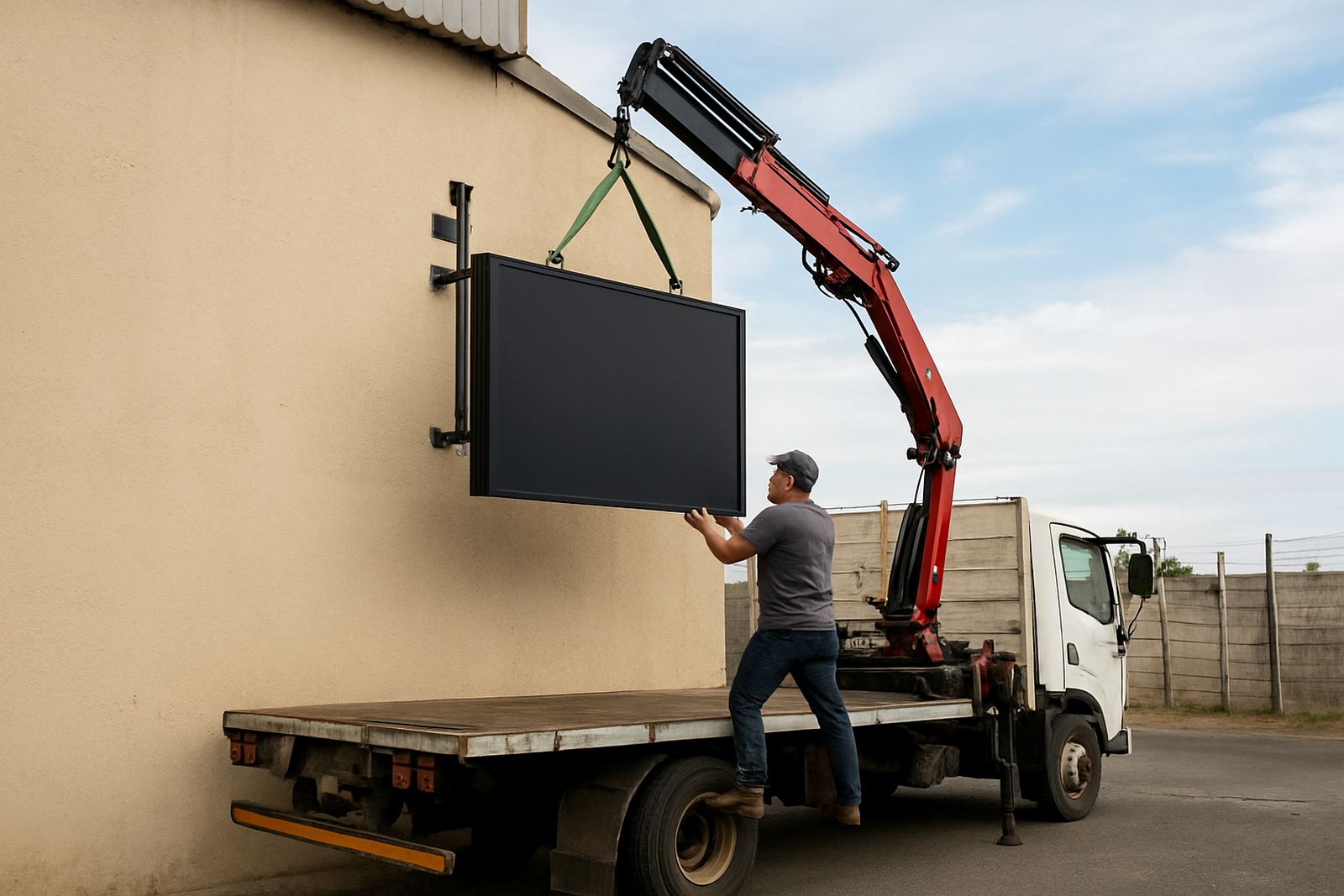
School signage can be small and simple or large enough to be seen from a road or sports field. We handle panels from around 300 mm x 200 mm up to large face signs and frames several metres wide, depending on the design and access method. The fixing method may include wall plugs, chemical anchors, standoff brackets, post and frame mounts, or cradle-style supports for larger boards.
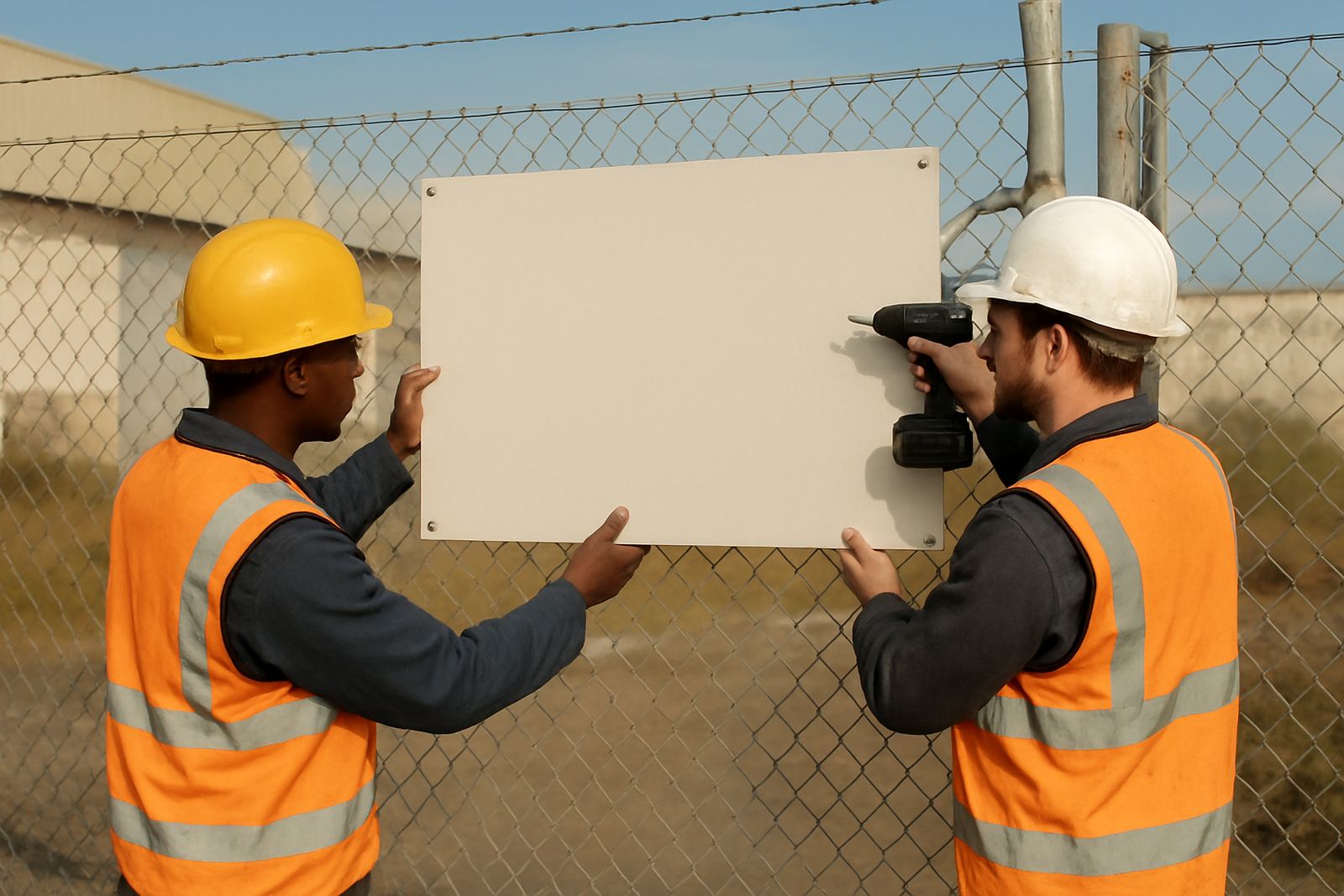
Where the sign is mounted affects the rigging plan. A wall-mounted hall board usually needs careful alignment and secure fixings into brick, concrete or steel. A freestanding entrance sign may need lift access or scaffold work if the face is high and set back from the road. For sports fields, we often work on perimeter fencing or light mast positions, so wind load and exposure need to be checked before installation. In coastal towns like Somerset West or areas close to the sea, corrosion resistance matters too, so fixings and brackets should be suitable for salt air.
- Flat wall panels and boards
- Double-sided directional signs
- Freestanding sign frames and posts
- Illuminated signs with service access
- Temporary signs for events, open days and renovations
Where school signage works best on site
We fit signage where people need direction and clear identification. That includes entrance gates, reception areas, staff parking, assembly halls, classrooms, libraries, gym halls, tuck shop areas and playing fields. In larger schools and campuses with multiple blocks, clear sign placement helps visitors and contractors find the right entrance without walking through learner areas.
Site conditions change from one school to the next. In Johannesburg CBD or the East Rand there may be tight urban access, security gates and limited laydown space. In parts of the Western Cape, schools may have wind exposure, sloped ground or older masonry that needs extra care when drilling and fixing. We also account for load-shedding if the sign has lighting, since testing needs to be arranged when power is available or backed up by the site.
For signs fitted near kitchens, workshops or science blocks, we check whether the area has heat, moisture or chemical exposure that could affect fixings and finishes. If the sign has LED lighting or internally lit faces, we confirm the route for power supply and the safe point of isolation before any work starts.
Installation planning, access and power requirements
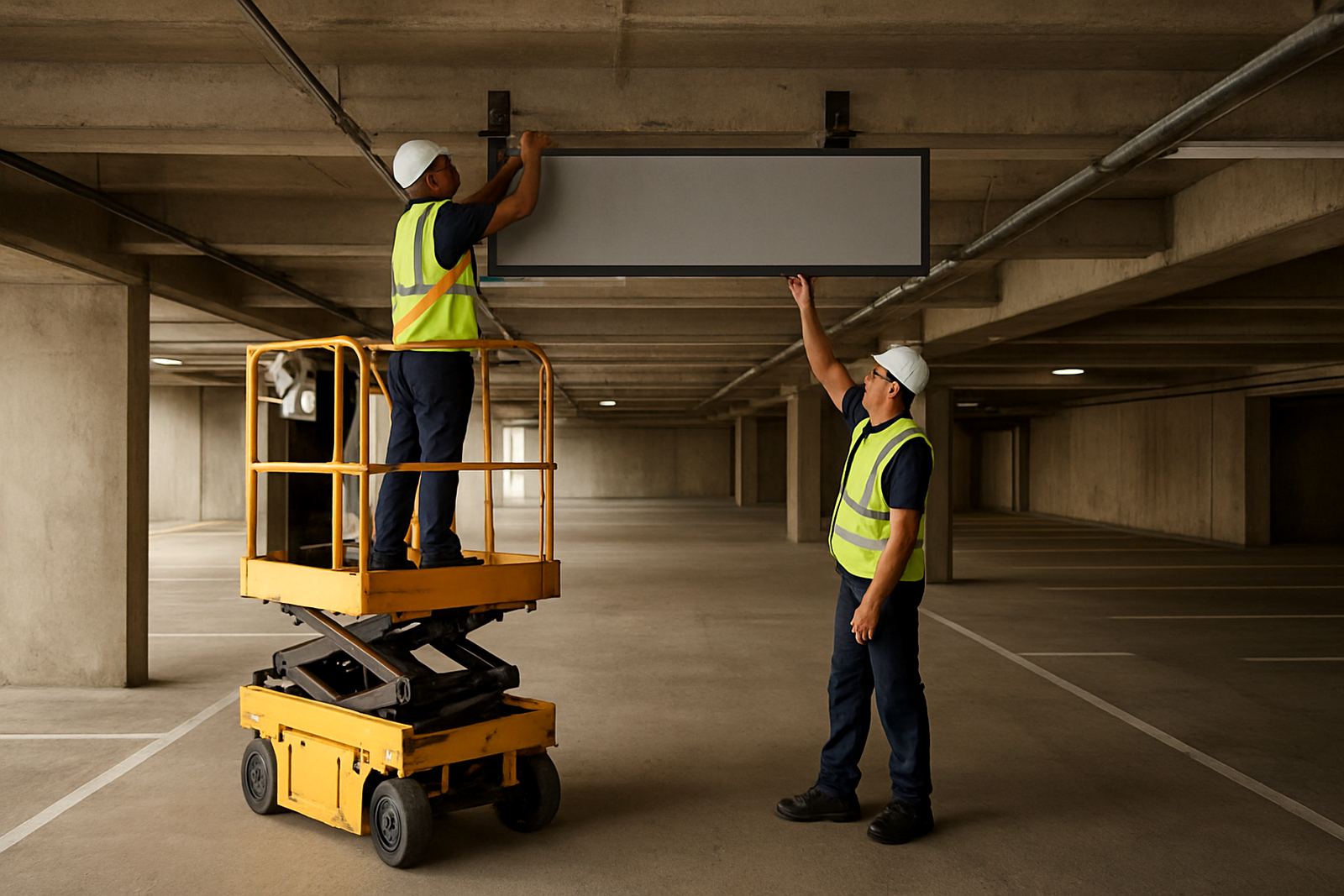
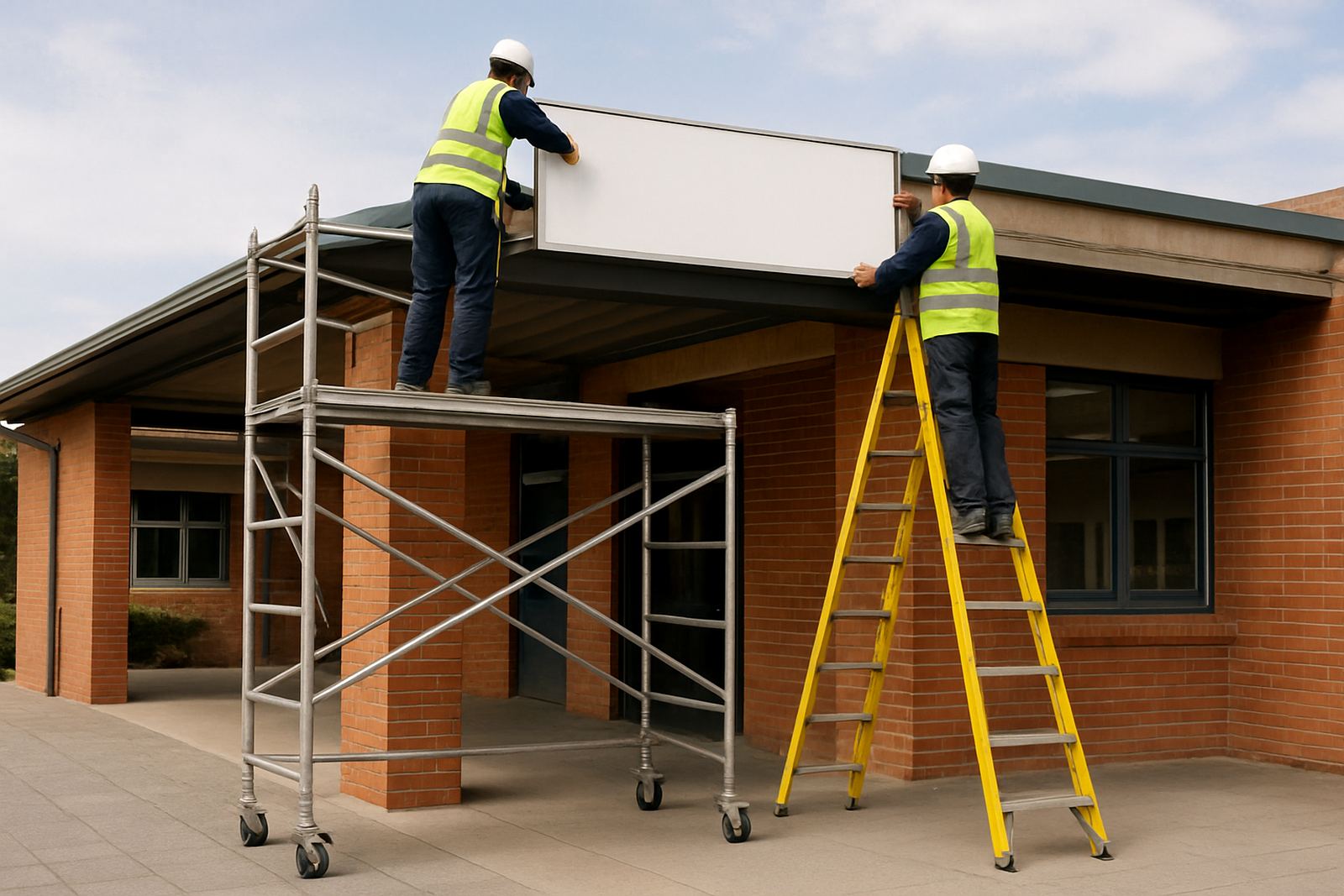
Before installation, we look at access, fixing surfaces, height, weather and any school rules that affect the job. If the sign is above 2 m or positioned over a walkway, we plan for scaffold, platform work or other controlled access rather than rushing the job. That keeps the crew steady and reduces the chance of damage to walls, cladding or paving.
For lit signs, we need the electrical point ready and isolated where required. Some signs need a dedicated feed, while others only need a simple connection from an existing circuit. If the sign includes motion, timer controls or lighting, the sign maker should confirm the electrical spec before delivery. We do not do the electrical supply design itself, but we work with the site team to make sure the fixing and access are sorted out before the electrician connects the unit.
- Clear access route for vehicles, ladders, scaffold or platform equipment
- Confirmed fixing surface and wall material
- Power point location for illuminated signage
- Permission for after-hours or holiday work
- Any school safety inductions or contractor rules
Removal, relocations and changeovers during term breaks
Schools often need older signs removed before a new intake, a rebrand, a building upgrade or a sports ground change. We remove panels, frames and faces carefully so surrounding paintwork, cladding and brick are not damaged. Where a sign is being moved from one wall to another, we can also handle the relocation and set-out for the new position.
Billboard-style face changes are not only for roadsides. Large campus identification signs and sports ground boards sometimes use removable faces or panels that can be changed when the school updates departments, house names or sponsors. If the sign has height or awkward reach, we bring the right access method and keep the area controlled while the old face is taken down and the new one fitted.
During term breaks, the schedule is usually cleaner and safer. There is less foot traffic, fewer vehicles in the way and more room for lifting equipment. Still, weather can be a factor, especially wind in open school fields or rain in winter. A solid plan means the work is done once, not twice.
Ongoing care for signs that must stay readable
School signs take a fair amount of wear from sun, dust, rain, bird droppings and general daily use. In coastal areas, fittings can loosen or corrode sooner than expected. We service signs by checking fixings, cleaning access points, tightening brackets and replacing worn hardware where needed. For illuminated signs, we inspect the mounting and look for signs of moisture entry or failed lamps and fittings.
Regular maintenance is useful for high-traffic schools because a loose panel or fading face can become a safety and appearance issue fast. A simple maintenance visit before the first term, or after heavy storms, can pick up small problems early. That is often better than waiting until a sign starts rattling in the wind or a face panel comes away at one corner.
- Check fixings after storms or strong wind
- Clean face panels to keep text readable
- Inspect lighting access points and seals
- Replace rusted brackets or worn anchors
- Review signs after building work or repainting
What to confirm when ordering school signage
To get the job done properly, we need clear details before the crew is booked. The sign maker should confirm the size, weight and fixing method, along with the exact school site, the preferred install time and whether the sign will need lift access, scaffold or platform work. If there is a power requirement, the supply point and isolation details must be ready before the callout.
It also helps to know whether the sign is being installed, removed, serviced or relocated. If the site is in a busy area like Johannesburg CBD, Sandton or Bellville, access times and security rules should be shared upfront. For schools near highways, open fields or coastal roads, wind exposure can change the fixing choice and maybe even the sign orientation. A few good details at the start save a lot of back and forth later.
- Final sign size, weight and material
- Mounting height and surface type
- Site address and access instructions
- Power needs for lit signs
- Preferred installation date and working hours
Key facts
| Service type | Rigging only for sign makers, schools and campuses |
|---|---|
| Typical sign sizes | Small boards from 300 mm x 200 mm up to multi-metre campus signs |
| Mounting options | Wall fixings, posts, frames, standoffs, scaffold and platform access |
| Locations covered | Cape Town, Paarden Eiland, Bellville, Somerset West, Paarl, Johannesburg CBD, Sandton, Midrand, East Rand |
| Best timing | Before school, after hours, weekends and term breaks |
| Power needs | Required only for illuminated signs, with site power or isolation arranged before work |