

When office buildings need sign work done from the outside
Commercial offices usually come with limited access, tight parking, glass façades and people moving in and out all day. That means a simple logo swap can turn into a lift plan, a scaffold decision, and a site visit before any tools come off the truck. In Cape Town, coastal wind and salt air add extra wear to external signs, while in Johannesburg the challenge is often height, traffic control and working around busy business hours.
We work for sign makers who need a rigging crew that can turn up prepared, follow site rules and keep the job moving without stepping into your client relationship. Our teams handle new installs, removals, face changes and servicing on office parks, CBD buildings and multi-storey business premises across Paarden Eiland, Bellville, Somerset West, Paarl, Johannesburg CBD, Sandton, Midrand and the East Rand.
- Tenant changes and rebranding on office fronts
- Damaged sign removals after storms or vandalism
- Lighting access for dead tubes, failed drivers or faulty cabling
- Out-of-hours work where the building cannot stop trading
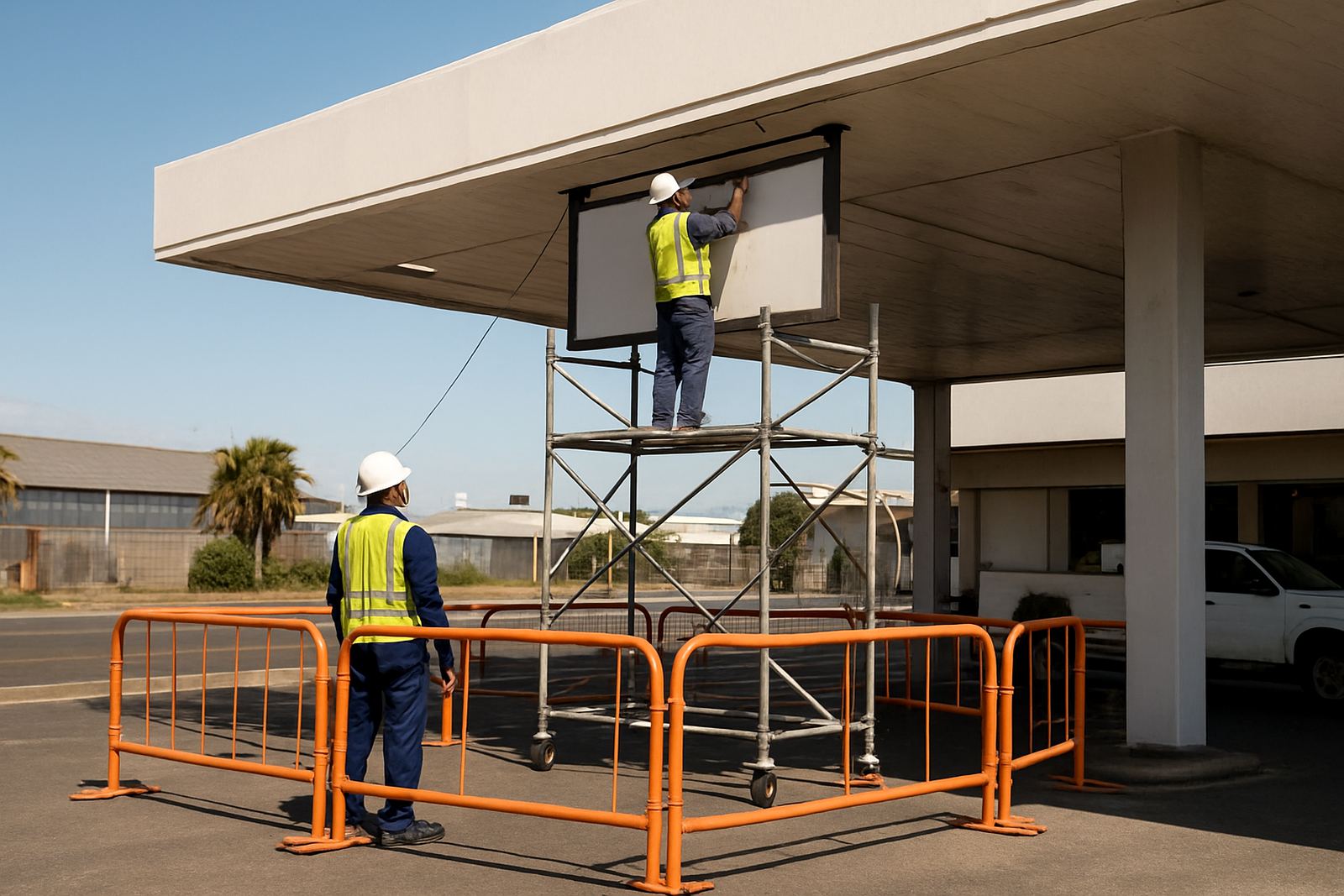
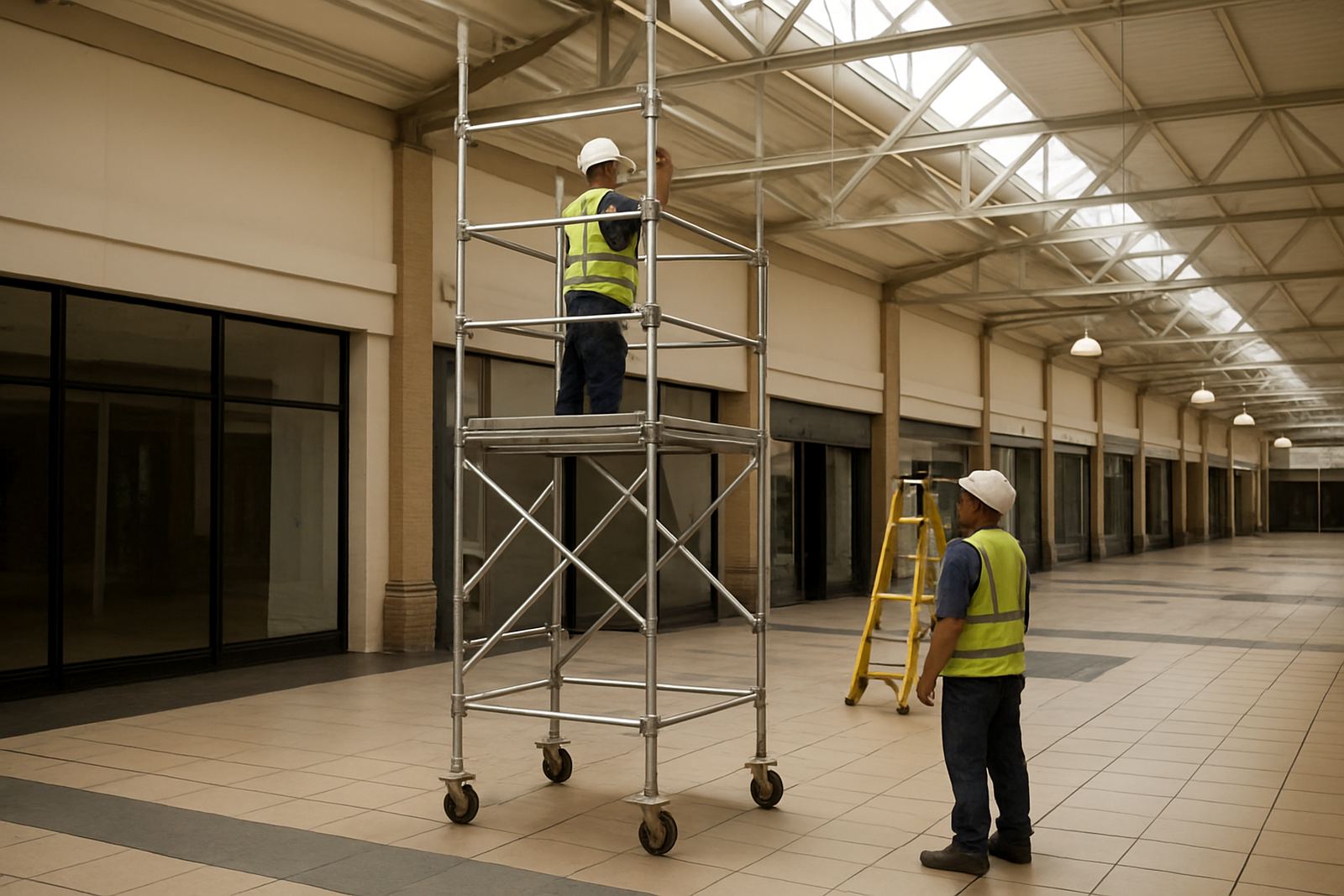
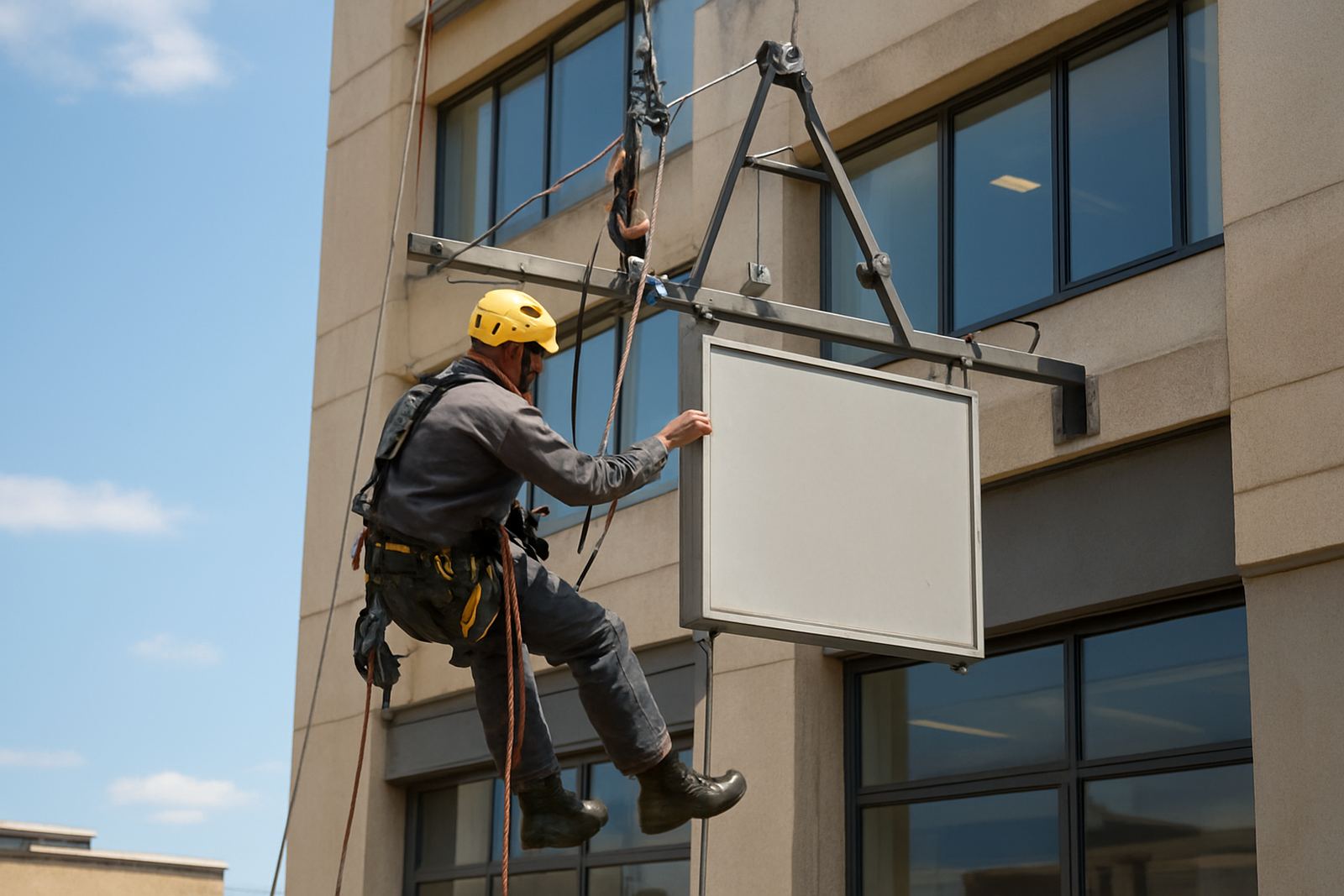
Typical access gear for commercial office sites
The right equipment depends on height, ground conditions, wall type and whether the sign sits over paving, glass, a loading bay or an underground parking entrance. We plan for the safest practical method first, then match the crew and gear to the site. If access is poor or the sign sits above a public walkway, the setup can easily change from a quick pole change to scaffold or platform work.
For commercial offices, the usual equipment set includes a mix of access and safety gear, not just lifting tools. We also factor in load-shedding if the sign has electrics that need testing or isolating on site. That is especially important when a building has back-up systems, timed lighting or shared electrical cupboards.
- Scaffold access for longer service work or repeated visits
- Cherry picker or platform work where ground conditions allow
- Fall arrest and harness systems for controlled access points
- Basic signmaking hand tools, fixings and electrical test gear
- Barrier tape, cones and temporary exclusion zones for public areas
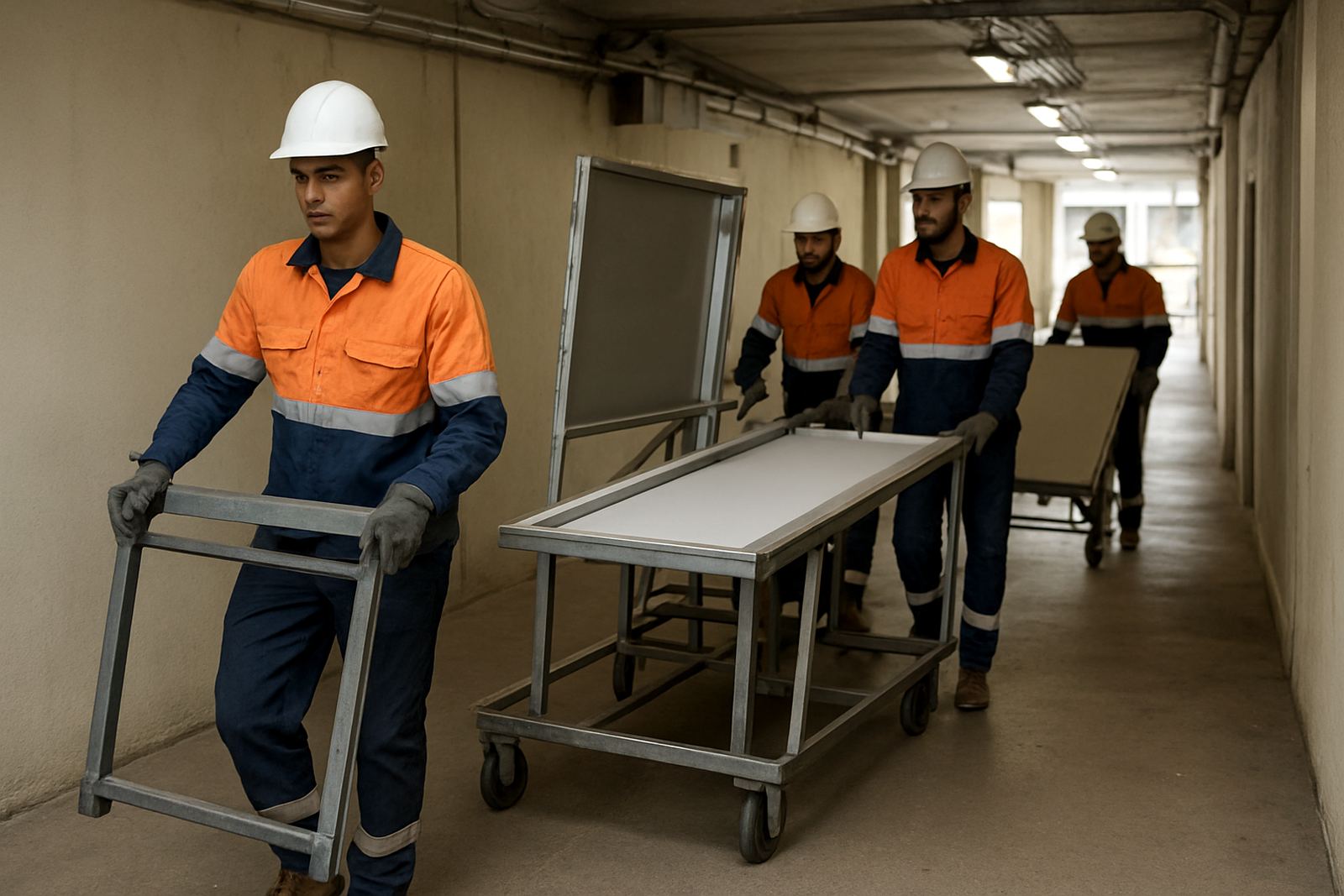
In some city sites, parking bays are too tight for bigger equipment, so we may need timed delivery, a traffic marshal or access through a service entrance. That planning makes a real difference to price and safety.
How we plan the job with sign makers and building managers
The best office jobs start with a site survey and a clear line of communication. We usually want photos, approximate sign sizes, mounting height, access restrictions and any building rules before we confirm a method. If the job is in a managed office park or sectional title building, there may be notice periods, induction requirements or limitations on after-hours noise.
Our operations team checks the practical details before a crew is dispatched. That includes whether the sign is on a façade, parapet, pylon, canopy or rooftop position, and whether there are live cables nearby. For bigger buildings, lift planning matters as much as the physical install because the wrong access choice can waste time and push up the cost fast.
- Confirm the sign dimensions and exact mounting position
- Check access hours, parking and any building induction rules
- Decide on scaffold, platform or rope-free access options
- Plan for electrical isolation where lighting is involved
- Set out a clear scope for install, removal, servicing or relocation
We keep the work in the hands of the sign maker, while the rigging team handles the access and site execution. That keeps the project clean and avoids mixed messages on site.
Common mistakes that make office sign jobs expensive
A lot of commercial office problems come from poor planning rather than difficult buildings. The most common issue is underestimating the height or reach needed for the job. Another is not checking whether the existing sign can be removed without damaging the façade, cladding or waterproofing. A quick job can become a repair bill if fixings are hidden or the substrate is already weak.
Electrical faults are another common problem. Office signs are often left on timers, sensors or shared circuits, and people assume power is off when it is not. On busy corporate sites that can be a safety risk, especially where the sign sits above a public entrance or vehicle route.
- Booking access gear too late for the building’s time window
- Not allowing for weather delays in Cape Town, especially wind
- Ignoring brittle cladding, aging fixings or water ingress
- Working without a proper exclusion zone below the sign
- Forgetting that replacement faces may need exact sizing and alignment
Good planning avoids extra callouts and keeps the building manager happy too. It also helps the sign maker protect margins, which matters when a client wants the work done by Friday but the site only allows access on Tuesday morning.
Budget ranges for commercial office sign work
Costs depend on height, access method, size of the sign, electrical work and whether the job is a remove only, reinstall or full service. Smaller office signage on easy ground level access may start in the low thousands of Rand, while multi-storey work with scaffold or platform access can move into a much higher bracket. If the building needs an urgent callout after hours, that also changes the figure.
As a practical guide, straightforward office sign removals or servicing jobs may fall in the R2,500 to R6,500 range, depending on access and time on site. Mid-level installs, face changes or lighting access work can sit around R6,500 to R15,000. Larger commercial or rooftop jobs with scaffold, lift planning and extra labour can go from R15,000 upwards, especially where the site needs more than one visit.
For sign makers quoting their own clients, the best approach is to separate access cost from the sign fabrication cost. That gives everyone a cleaner margin and makes it easier to explain why a Sandton tower job is not priced like a small shopfront in Bellville.
Why sign makers use a dedicated rigging crew
Commercial offices need calm, organised work and a crew that understands building rules. Our teams are first-aid trained, safety aware and used to working around tenants, security staff and maintenance schedules. We cover installation, removal, servicing, lighting access, site surveys, lift planning, scaffold access, platform work, billboard face changes, emergency callouts, sign relocations and maintenance visits.
Sign Riggers stays on the rigging side of the job, which means your business keeps control of the client relationship. We arrive ready to work, keep the site tidy and hand over once the sign is safe, aligned and tested. From Paarden Eiland to Johannesburg CBD, that is what office clients need most: less fuss, fewer delays and work done properly the first time.