

Municipal work needs a crew that understands the programme
Public signage jobs often sit inside a larger contract with roadworks, civils, electrical work or urban upgrades. That means the sign package must land on time, fit the drawings, and clear the site rules on traffic accommodation and public safety. We assist contractors who need rigging only, so the sign maker can stay focused on fabrication while we handle the on-site access and fitting.
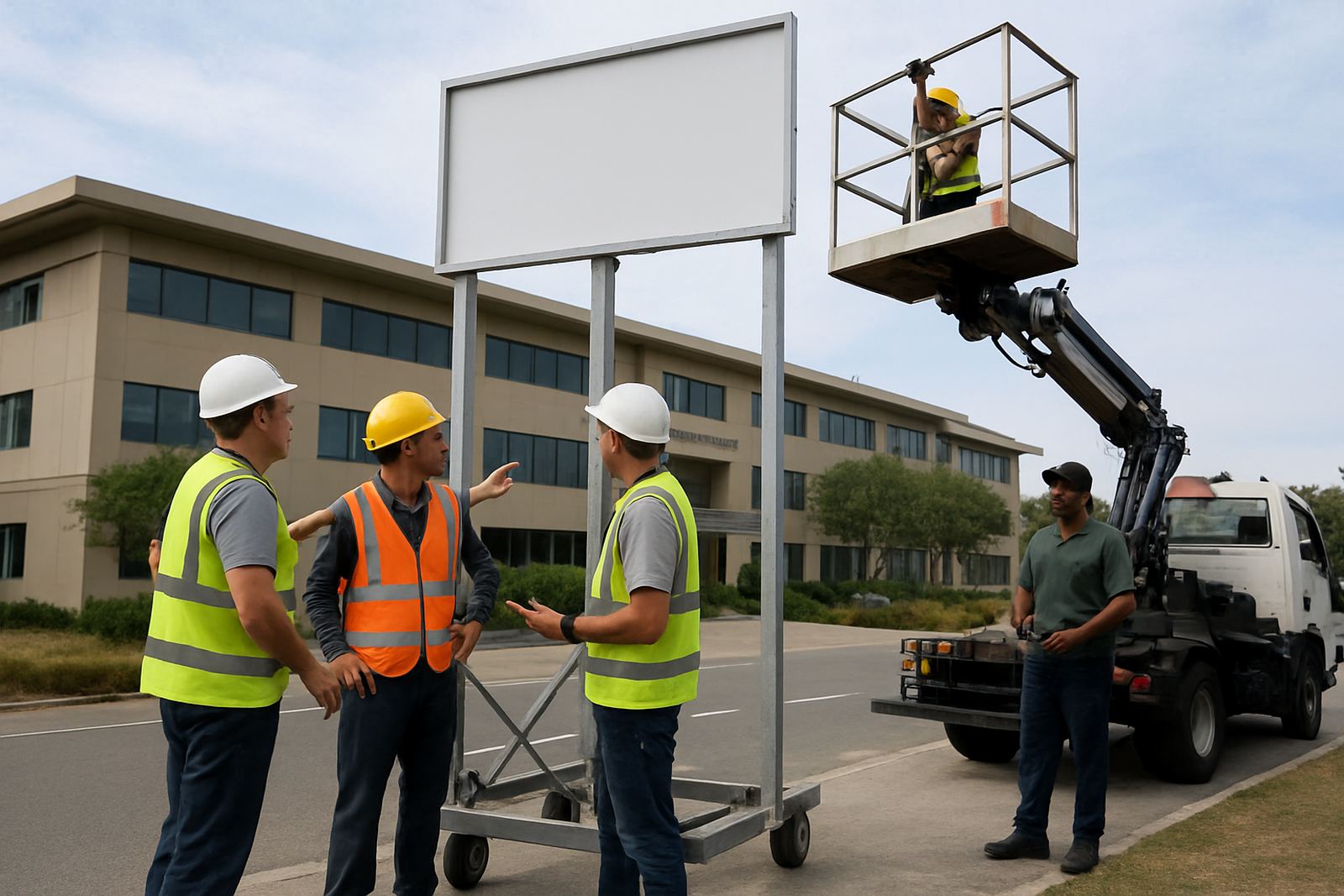
In places like Paarden Eiland, Johannesburg CBD and Sandton, the biggest pressure is timing. You may have a lane closure for two hours, a pedestrian management plan, or a municipality that wants work done before peak traffic. We plan the lift, confirm the fixing points, and make sure the crew arrives with the right access equipment. That keeps the job moving and reduces the risk of repeat visits.
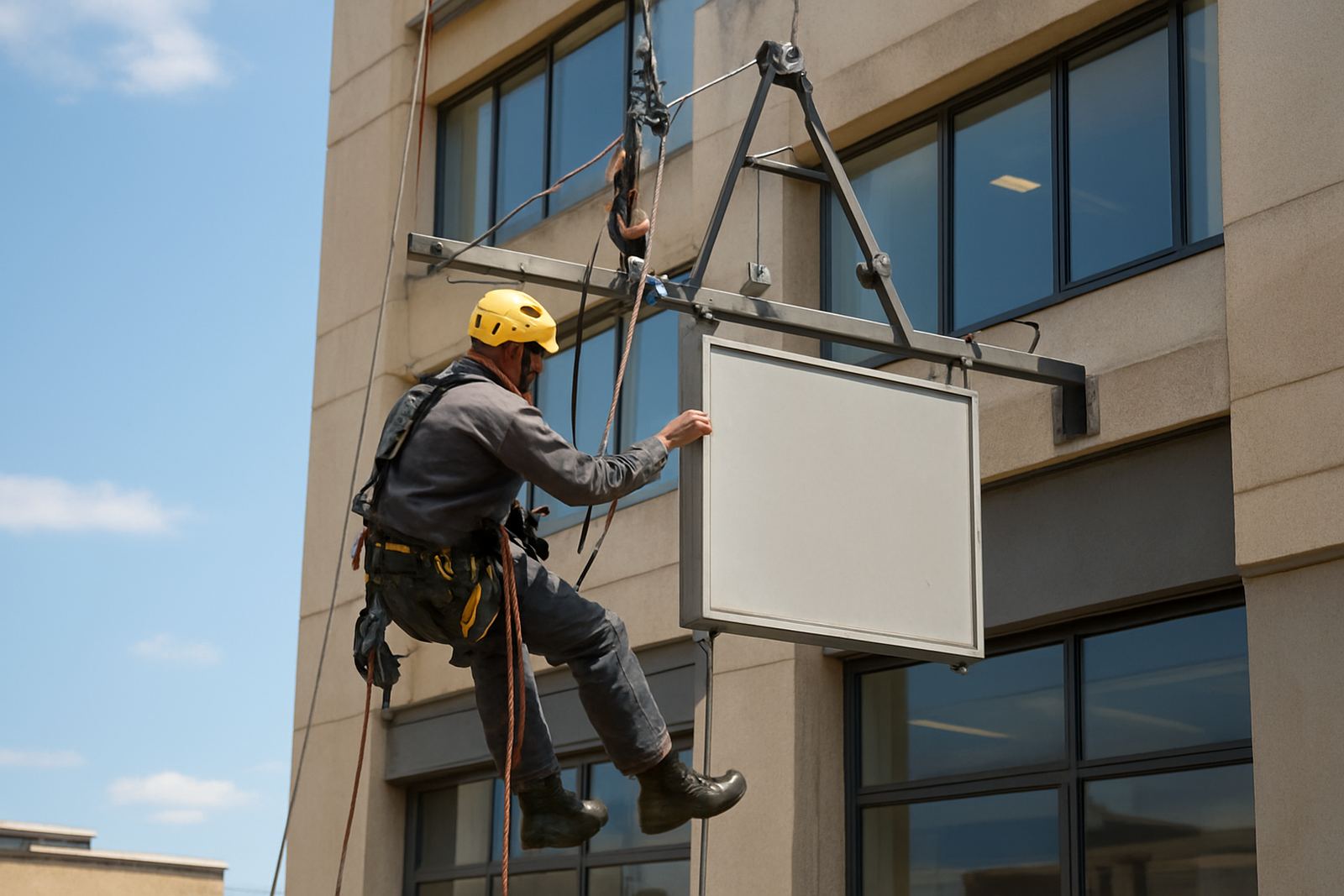
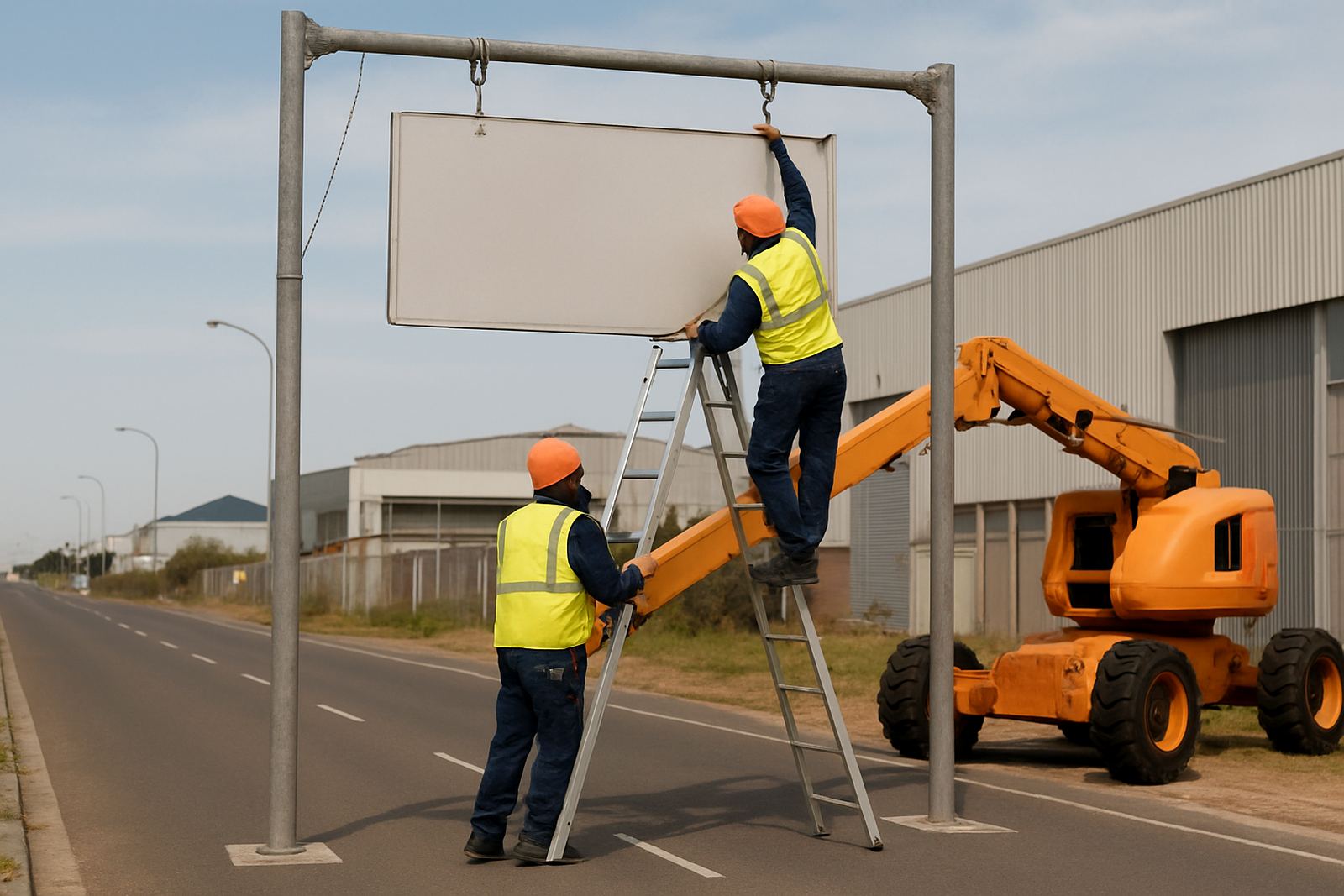
- Sign installation for street-facing and public realm signage
- Sign removal for upgrades, replacements, and emergency take-downs
- Lighting access for fittings at height and hard-to-reach points
- Lift planning, scaffold access and platform work where required
Typical equipment for municipal sign projects
Every site has its own access challenge. A low wall sign in Bellville may only need a small platform and a two-person crew, while a gateway sign along a busy arterial route in Midrand might need a scaffold tower, harnessed access and traffic accommodation. We look at the sign size, mounting height, wind exposure and surrounding services before we send the team out.
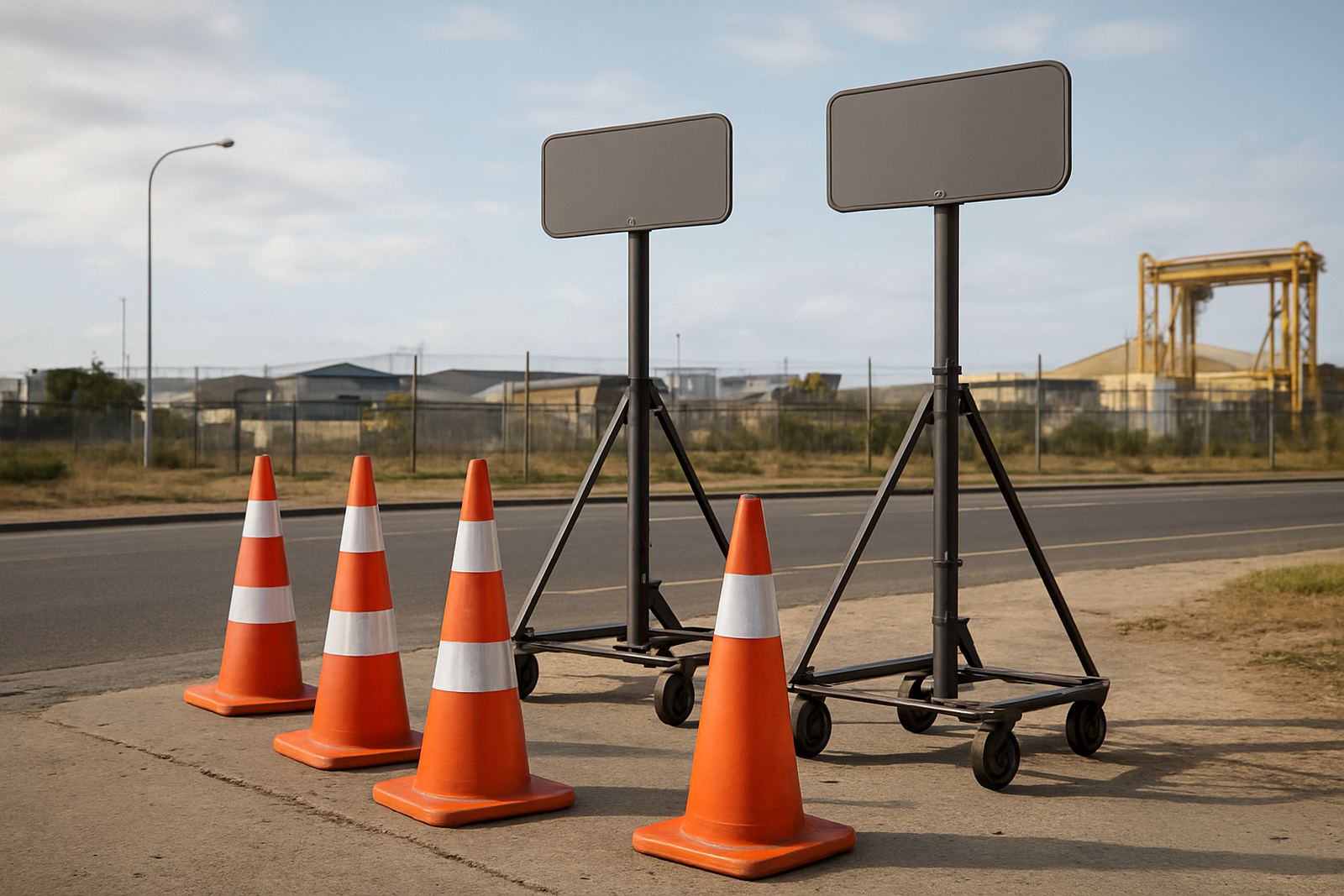
For municipal work, the equipment set usually includes a mixture of access gear, lifting gear and safety controls. We also check whether the location is exposed to coastal humidity in Cape Town or dust and heat on Gauteng sites, because those conditions affect both safe handling and the life of fixings. If the site is on a live road reserve, we factor in cones, signage, spotters and a clear exclusion zone.
- Scaffold towers and platform work for elevated fixing points
- Light-duty lifting aids for panel placement and alignment
- Harnesses, lanyards and fall protection for working at height
- Tools for bracket checks, fastener replacement and re-securing loose components
Planning the layout before the truck arrives
A municipal sign job goes smoother when the layout is clear before the crew loads out. We recommend marked-up drawings that show the final height, orientation, fixing substrate and any nearby services. If the sign is above a pavement, road verge or pedestrian route, it helps to know where access can be set down and whether any overnight storage is permitted.
For contractors, the best results come from a quick site survey before the install date. That lets us confirm clearances, measure the fixing points and identify any issues with old steel, damaged walls or poor previous workmanship. If a sign is being relocated, we also check whether the original hole pattern can be reused or if new support is needed. That can save time and avoid a second callout.
- Confirm the exact sign position against the drawing, not just the approximate area
- Check vehicle access and where the truck can safely stop
- Allow for pedestrian flow and public barriers if the work is in a busy area
- Plan for weather delays, especially wind on exposed coastal sites
Common mistakes that cause delays and extra cost
Most delays on municipal signage jobs happen because access was under-planned or the substrate was not properly checked. A wall can look sound from ground level but still need repair before a large sign goes up. We also see jobs where the fixing hardware was not matched to the load, or where the sign shop supplied a panel that arrived without the final dimensions confirmed. That creates avoidable rework and extra charges.
Another common problem is underestimating lift access. A sign may only be 5 metres up, but if there are trees, overhead cables, kerbs or parked vehicles, the real challenge is getting the crew into position. On live municipal sites, it is also important to brief the area team about cordons, public interaction and who signs off once the work is complete. Clear responsibilities save time and stop arguments later.
- Wrong measurement for height or bracket centres
- No allowance for traffic control or pedestrian management
- Fixings chosen without checking the wall or steel condition
- Leaving servicing until the sign fails, instead of booking maintenance visits
Budget ranges for contractors and public signage work
Costs depend on access, height, urgency and whether removal, reinstallation or servicing is needed. Small municipal sign installs in easy-to-reach positions may start from about R2 500 to R6 500 for labour and access planning, excluding fabrication and any specialised traffic control. A more involved job with scaffold access, lift planning and a larger sign can run from R8 000 to R18 000, while urgent after-hours or emergency callouts cost more because of crew standby and timing.
For ongoing maintenance, many contractors prefer scheduled visits rather than waiting for a failure. A routine check on multiple signs across one area can be more cost-effective than separate emergency trips. If your work covers several towns, such as Paarl, Somerset West and the East Rand, grouping sites by route can also reduce travel time and keep the budget under control. It is not unusual for a planned maintenance run to save a few thousand rand over the quarter.
We quote according to the site conditions, not just the sign size. That means you get a practical figure that reflects the real access required. If the site needs removal and reinstallation after civil works, we can price both legs of the job so there are no surprises on handover.
How Sign Riggers works with municipal contractors
Our role is simple: we support sign makers and contractors with the rigging side of the job and stay out of their fabrication scope. That means your team keeps the client relationship and the design responsibility, while we handle the physical installation, removal or servicing on site. We have crews based in Paarden Eiland and Johannesburg, which helps with response times across the Western Cape and Gauteng.
Gareth van der Merwe leads the business, with Thandi Mokoena coordinating operations, Liam Jacobs supervising rigging work, Sibusiso Dlamini overseeing safety, Ayesha Daniels managing client liaison and Pieter Coetzee looking after fleet and access. The team works with first-aid trained and safety-aware procedures, because municipal work often happens around the public and under tighter controls than a standard private-site job.
- Service area includes Cape Town, Bellville, Somerset West and Paarl
- Gauteng coverage includes Johannesburg CBD, Sandton, Midrand and the East Rand
- Enquiries come through the contact page form so the job details are captured properly
- Suitable for planned contract work, maintenance visits and emergency removals